For the most part, the coal dock is a simple model. The tricky bit is going to be getting the legs all evenly spaced and plumb. To help with that, I decided to cut a base with the laser.
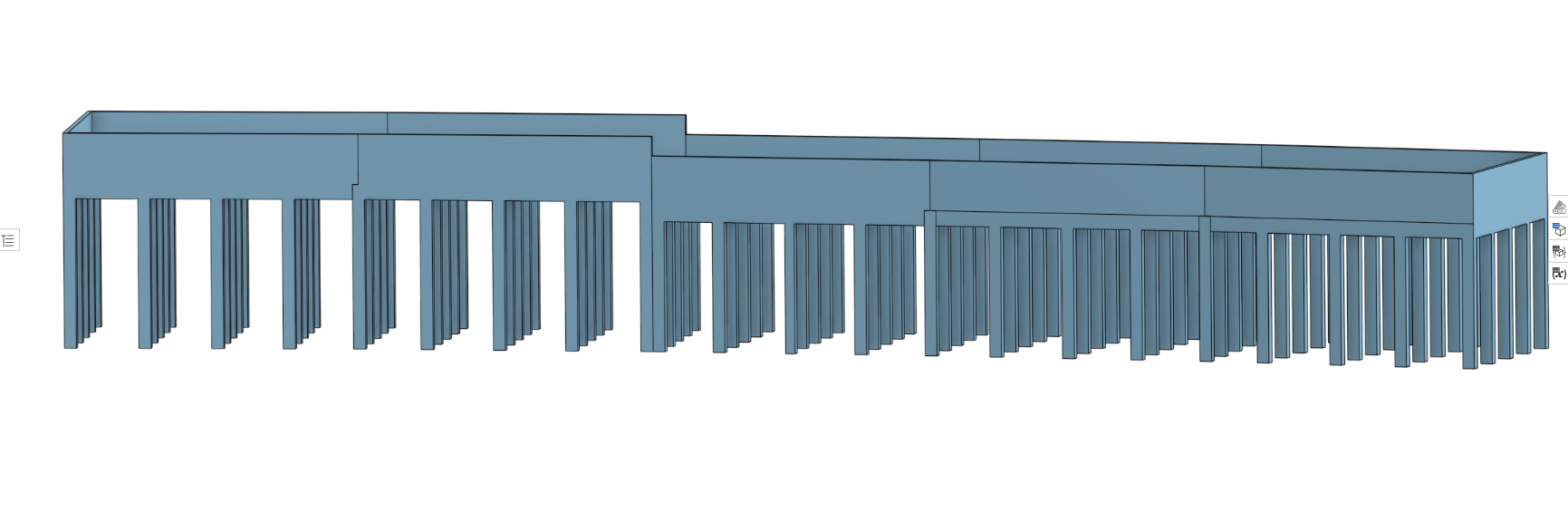
This, in turn necessitated a rough 3D design, which took an evening to put together. I based the design, particularly the spacing of the supporting posts and stringers, on the Alpine, Colorado platform. This yielded a whopping 110 legs!
The engine lead is on a grade, which creates the separation between track levels that would be present if the mainline were on the opposite grade, as it is supposed to be. I pondered how the coal dock would handle such a grade, and ultimately decided it will be on two levels. This makes for an interesting story where the original dock was enlarged when 51/52 started running through to Ottawa. I also like the way the two levels echo the barns in the distance, tying the foreground with the background.
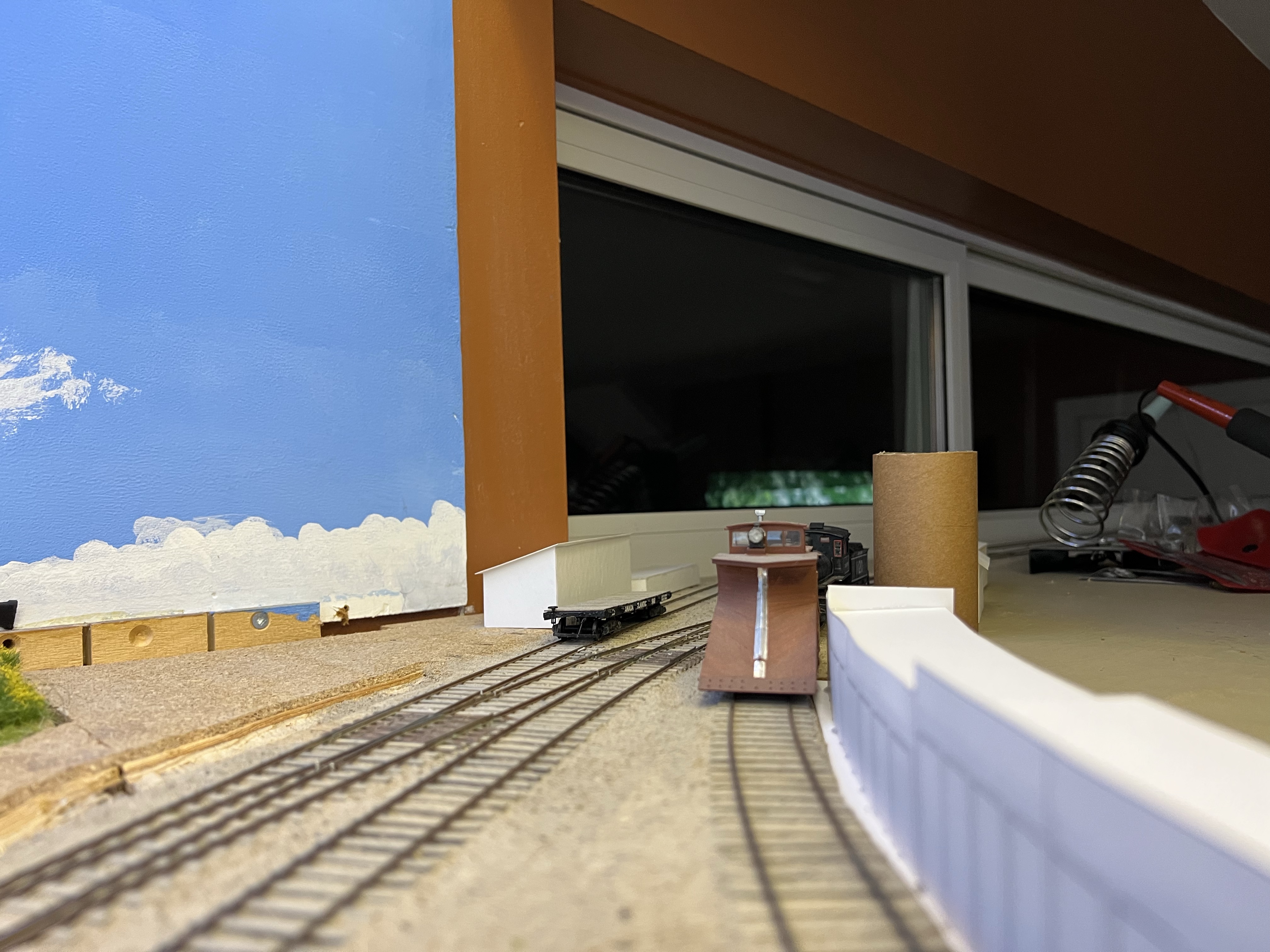
The grade itself was established with layers of cork, and I cut them away neatly so the recess for the coal dock could be cut to fit in like a puzzle piece. Then, I printed all the elevations on paper and hot glued them to some scraps of foam core to make a final mockup, which I could test for fit with some wide pieces of equipment, like Ron Keith’s plow and Percy.
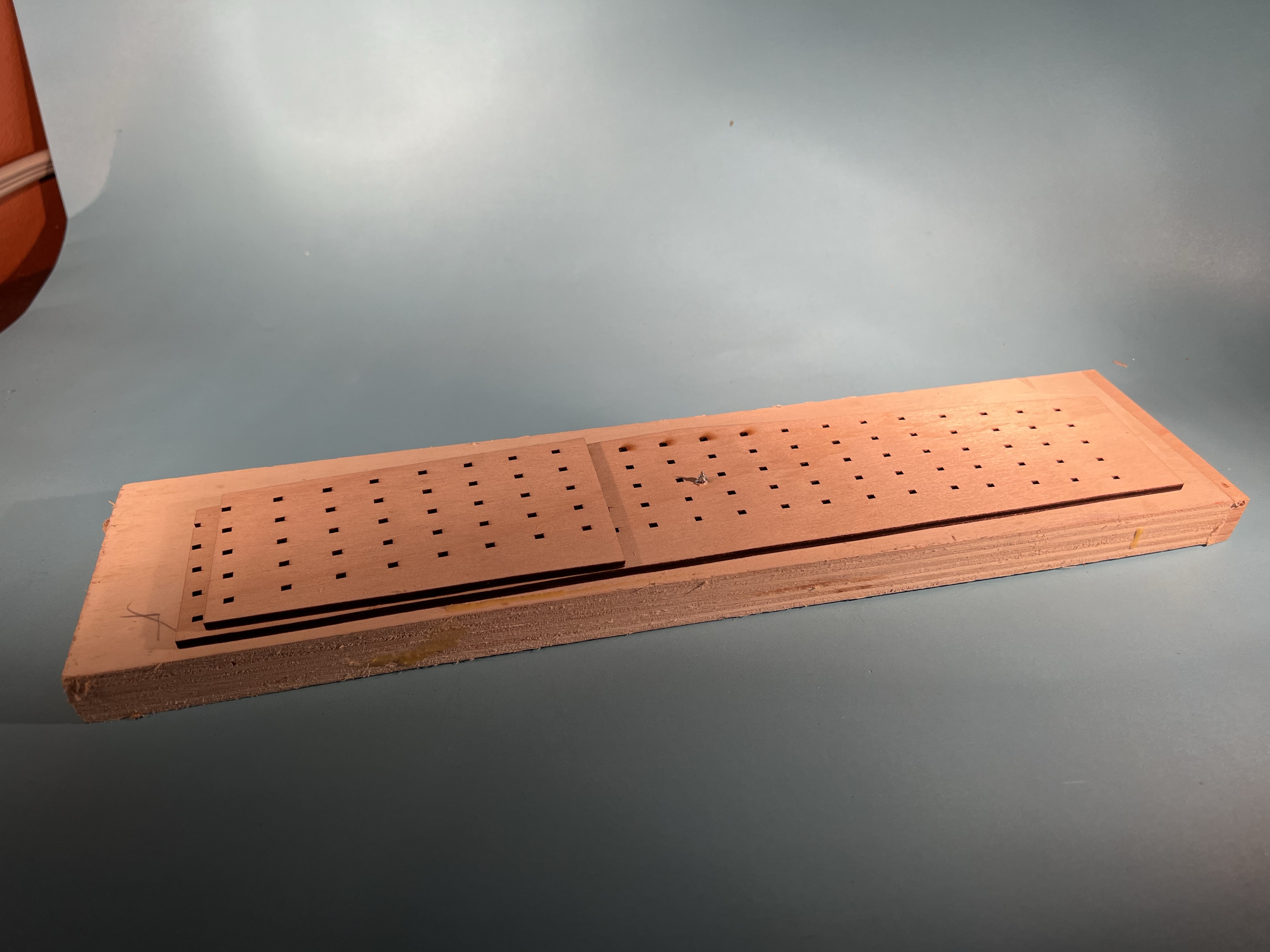
When I was satisfied with the design, I fired up the laser and burned some 1/8″ Baltic Birch plywood. I now have 105 oblong holes arranged on a segmented arc in a piece of plywood. I also, by the way, have 150 tiny rectangular pieces of plywood; if ever there was a solution looking for a problem, here it is!
 Pembroke:87