When I initially routed out the stream on the cattle spur module, I felt the roadbed was too low to allow for a culvert, and so, I chewed straight through the roadbed to make a space for a bridge. The rails flew over this chasm for months as I waffled on the bridge or culvert question. Unsafe for engines, but fortunately the switch is not yet in service anyway.
Eventually, even the most difficult decision gets made, and I finally came out in favour of a culvert. Real railroad bridges present an alignment challenge at the ends where the rigid structure of the bridge meets the more forgiving nature of the roadbed, and so the prototype builds a bridge only when there is no other option. Consequently, while there was no bridge in this area, there were many culverts. Added to that the fact that digging out a gap in the mainline and siding roadbed for a bridge where none had been planned would be laborious and risky, and I now wonder why the decision took so long.
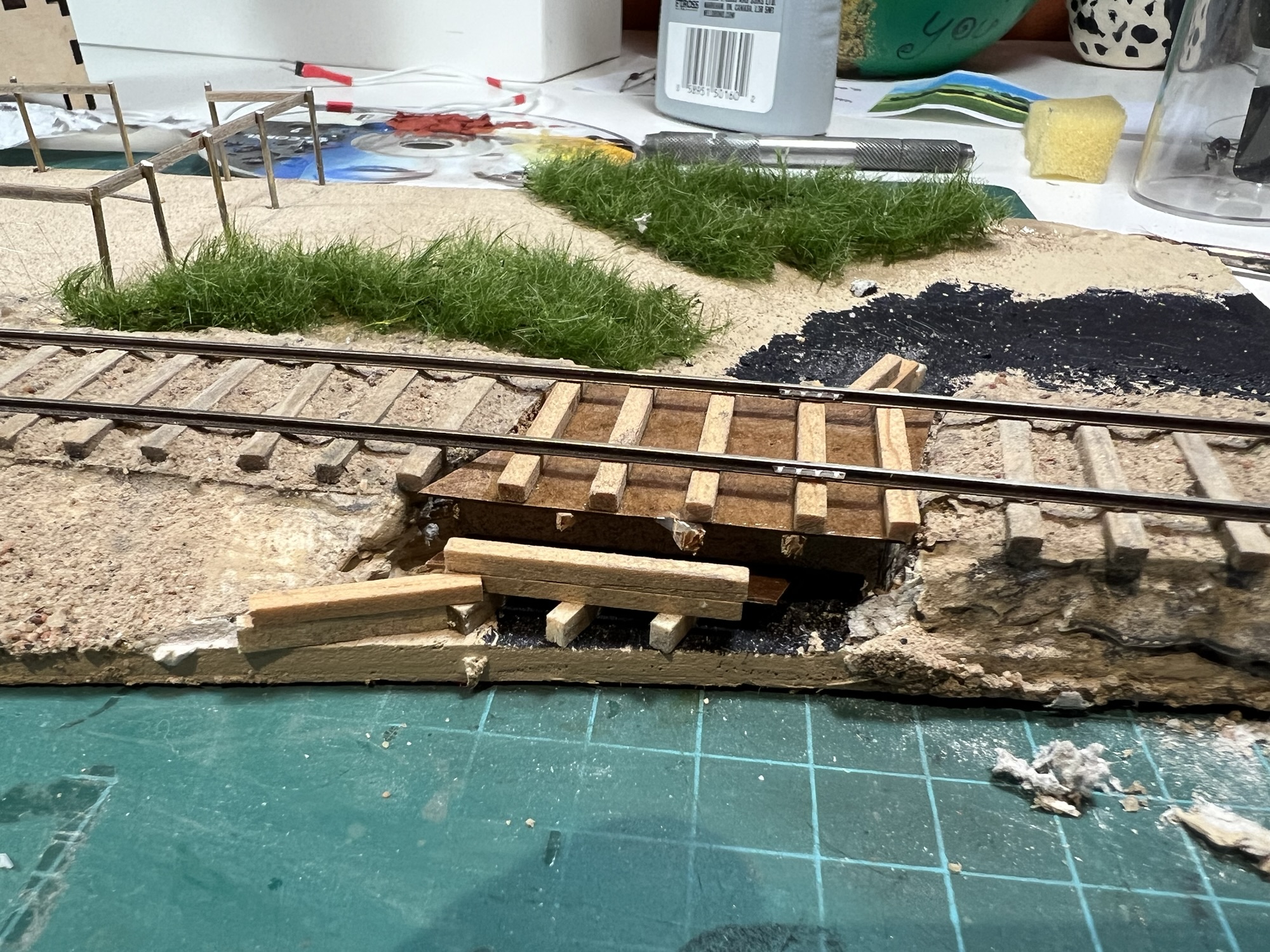
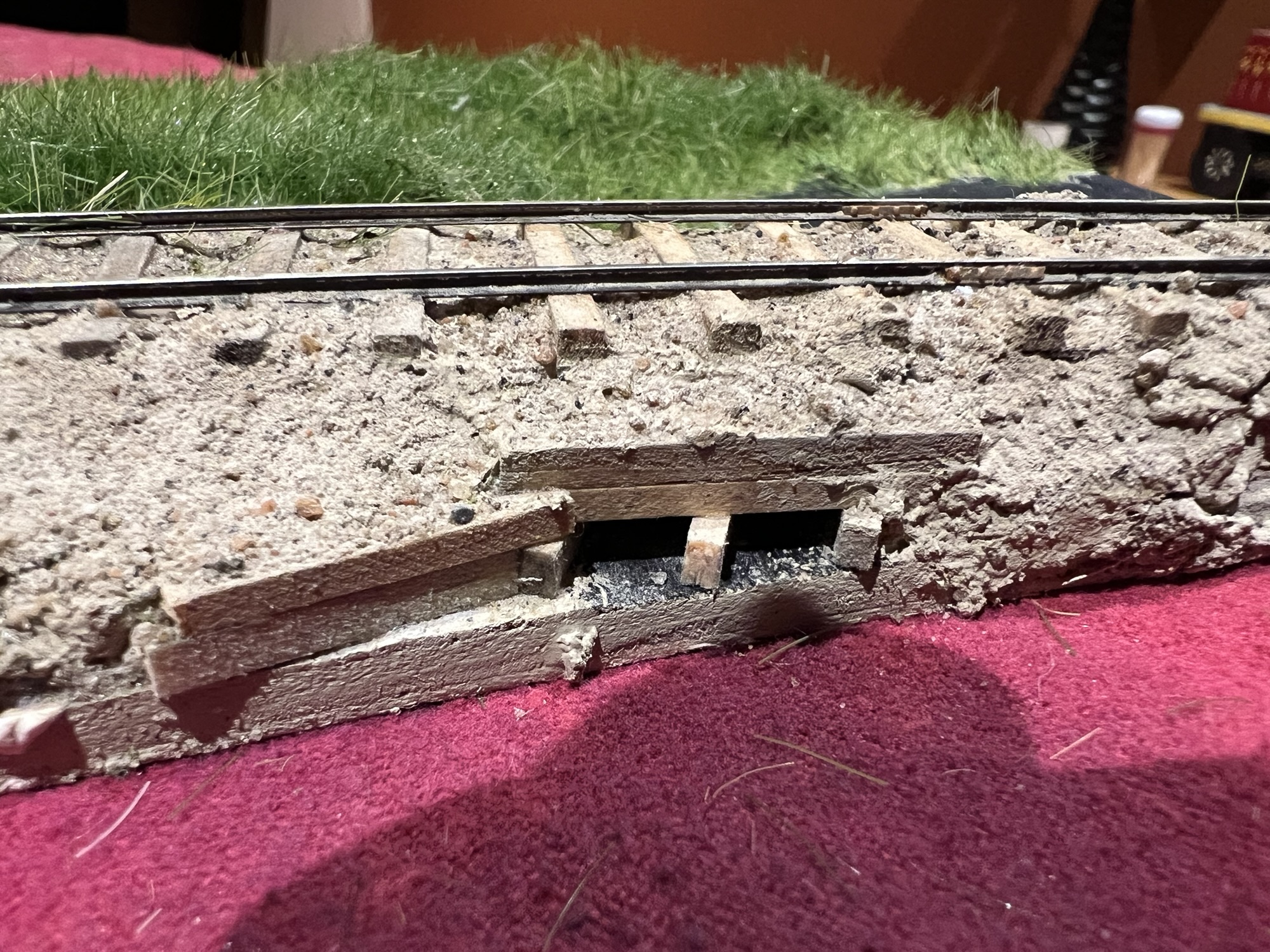
Perhaps I really made up my mind long ago, but it took ages to convince myself of that. Once under way, the culvert took almost no time at all. There was a handy collection of ties and timbers already prepared for the bridge. So, I stacked them up to make a double box culvert about four feet wide. I used a couple of bridge timbers and some scrap laser board for the roadbed, and then shimmed it until the ties were just touching the rails.
It wasn’t pretty, but it was pretty solid once the glue dried. Then I hid all the evidence (except I suppose for a photo now available on the Internet) with a layer of ground goop and covered it with ballast. There isn’t much room in the culvert for the spring freshet, but it looks pretty believable otherwise.
 Pembroke:87