…There where it is we do not need the wall:
Mending Wall, by Robert Frost
He is all pine and I am apple orchard.
My apple trees will never get across
And eat the cones under his pines, I tell him.
He only says, ‘Good fences make good neighbors.’…
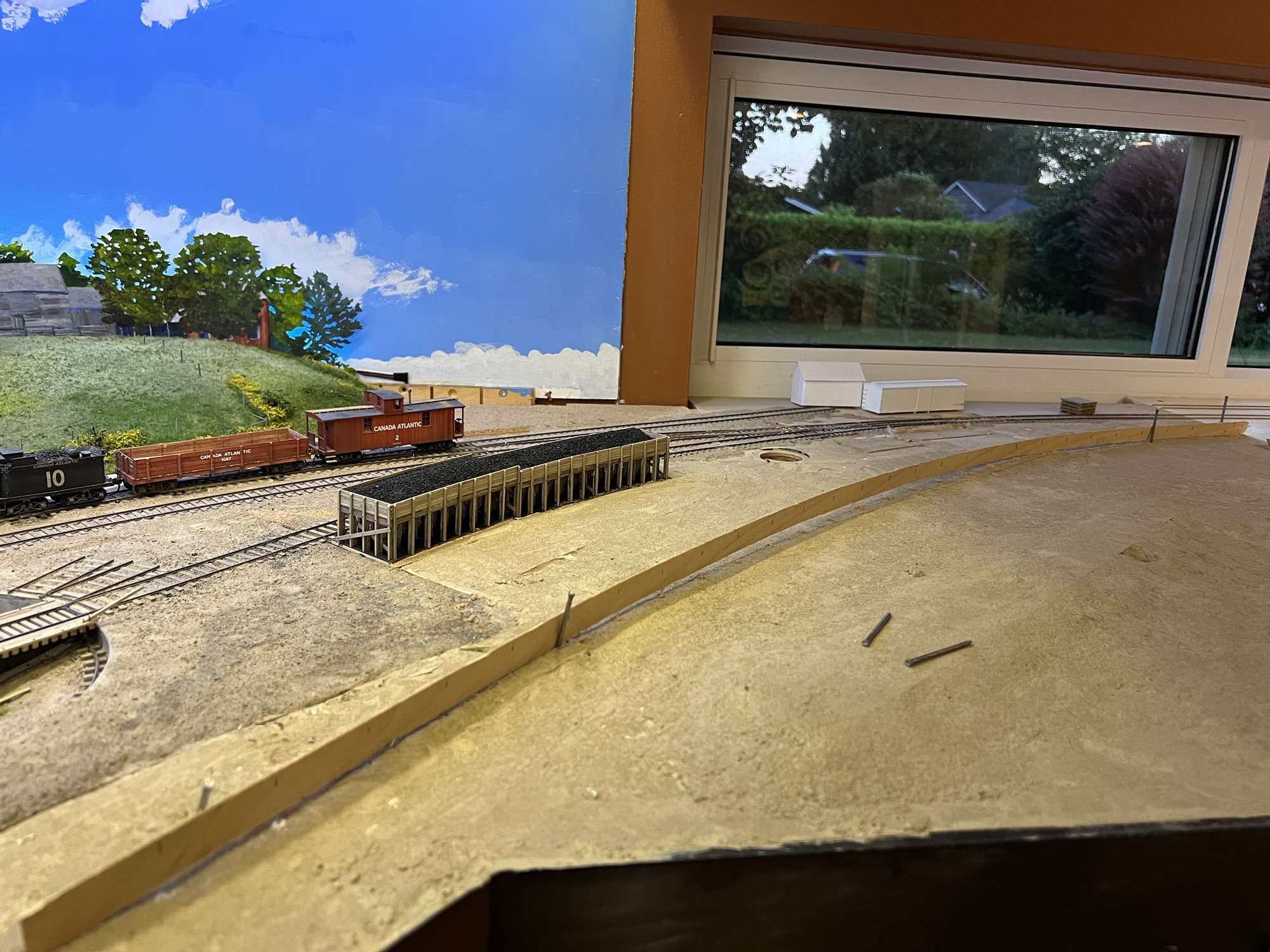
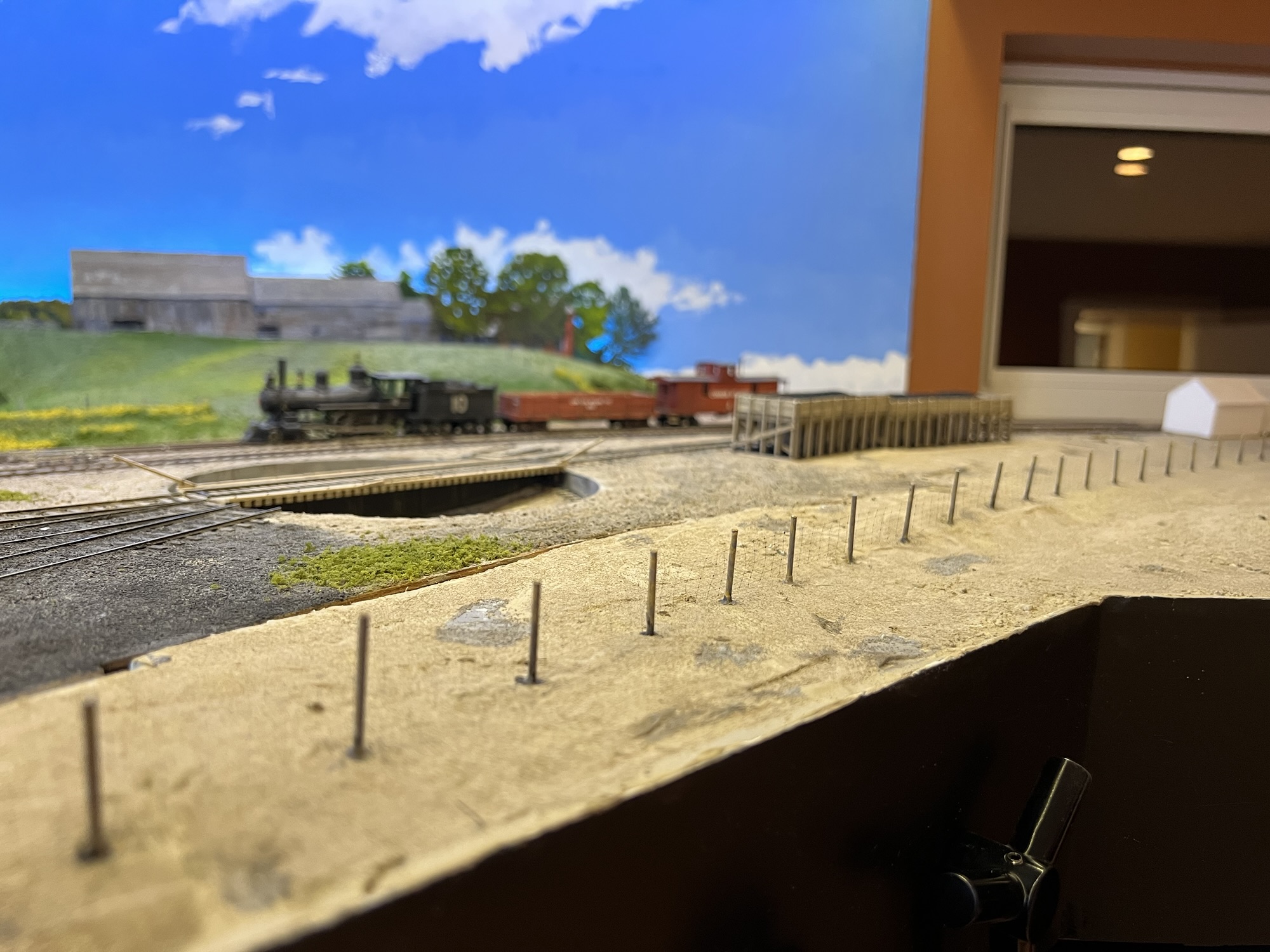
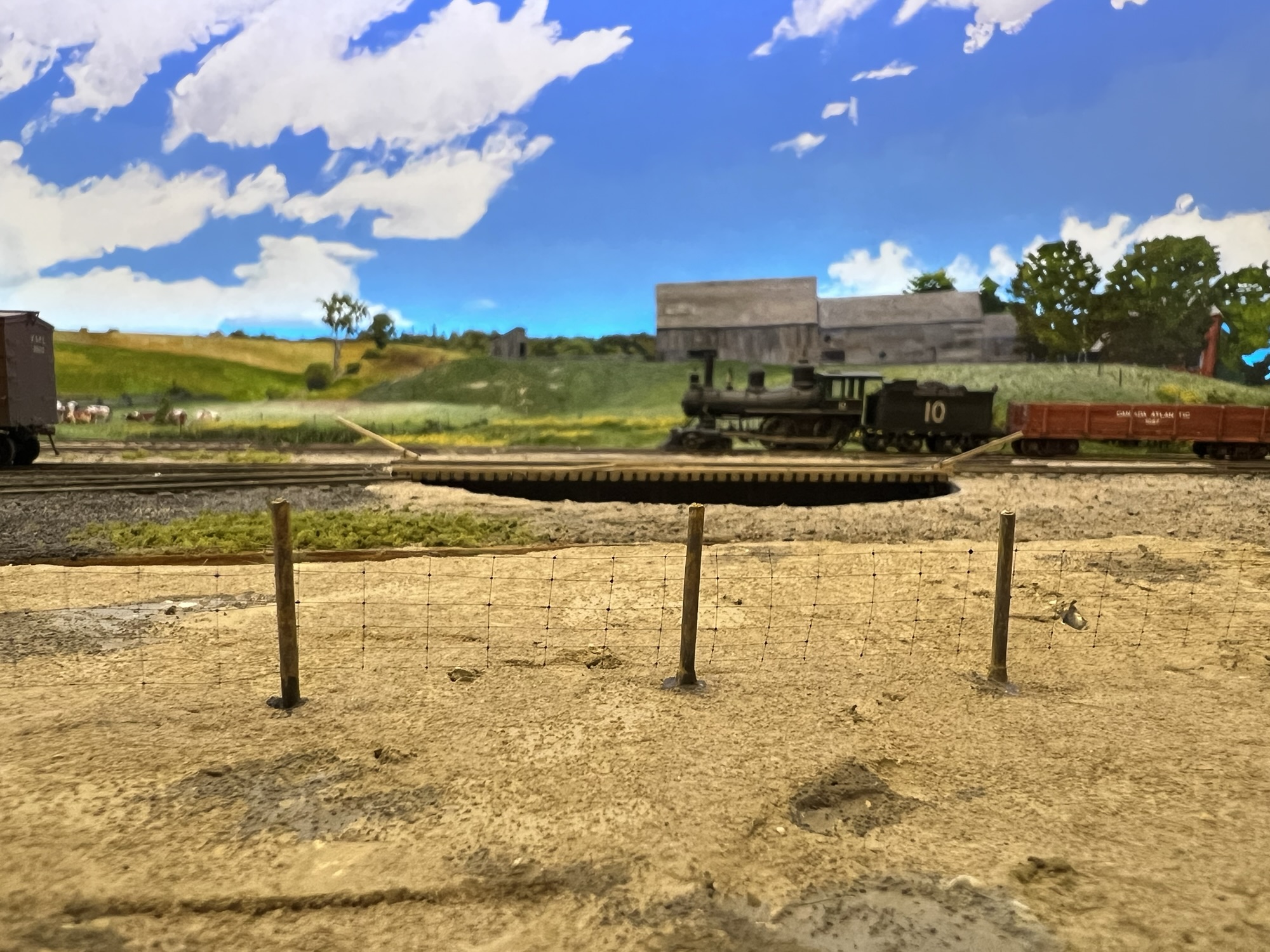
Behind the engine shed on Pembroke, the fence separates track from a (probable) hay field. The engines are hardly going to jump up and roam the hay field, and the hay isn’t likely to cross over and sue the railroad when it gets run over. And anyway, if either of them took a mind to getting across the fence, this puny wire fence is not going to be a deterrent. Still, there would have been a fence there.
Thanks to Rob Kirkham, the 1.5 metres or so of fence required actual fence material, and consequently, it took about as long to put up as a real fence of comparable length. To lay out the holes for the 1/16″ styrene fence posts, I bent a piece of wood that was marked at 12-scale-foot intervals. At each of the marks, I drilled a hole, and planted some post material.
When building the cattle pens, I found it was best to keep the fencing under some slight tension, which is easiest with the material on the outside of a corner. So, I put the wire material on the far side. This choice also made it easier to hide the dots of CA holding the wire in place.
Was it worth it? You bet! But I’m glad Pembroke is a small layout.


I looked into the provisions requiring line side fencing years ago; can’t remember the details now, but a quick Google search indicates it was first enacted with an amendment to the Railway Act in 1868. As I recall, the primary obligation was to fence inside/near communities. Yet how seldom do we see this modelled along the right of way. It’s such a railroady detail to capture.
I just have to ask. Are you thinking about stringing telegraph wire as well?
Yes, I forget which document I read, but the railway had n miles of track and 2n miles of fence.
Yes, to telegraph. It was on the east (far) side of the tracks. I believe it was only one wire here.