24 buckets! My friend Al Lill was speaking to another model railroader last week, who helped around the CNR Victoria roundhouse in his youth. One of his jobs was to fill the sand dome on the little consolidations that plied the Island line, and he told Al that they held 24 buckets of sand in their sand domes. The usage depended very much on the engineer: some hardly used any sand and some had to top up during the day!
I was surprised to hear sand consumption was so great. I would have expected a tenth as much, and with Pembroke’s small engines I thought a car of sand might be an annual occurrence.
The Pembroke Southern and the line to Ottawa were not mountainous, but they weren’t flat either. So, let’s suppose the two engines consumed 10 buckets of sand between them per day. A bit of Googling for bucket sizes and sand densities and a bit of mathing results in an estimate of 30 lbs per bucket of sand. So, 300 pounds per day.
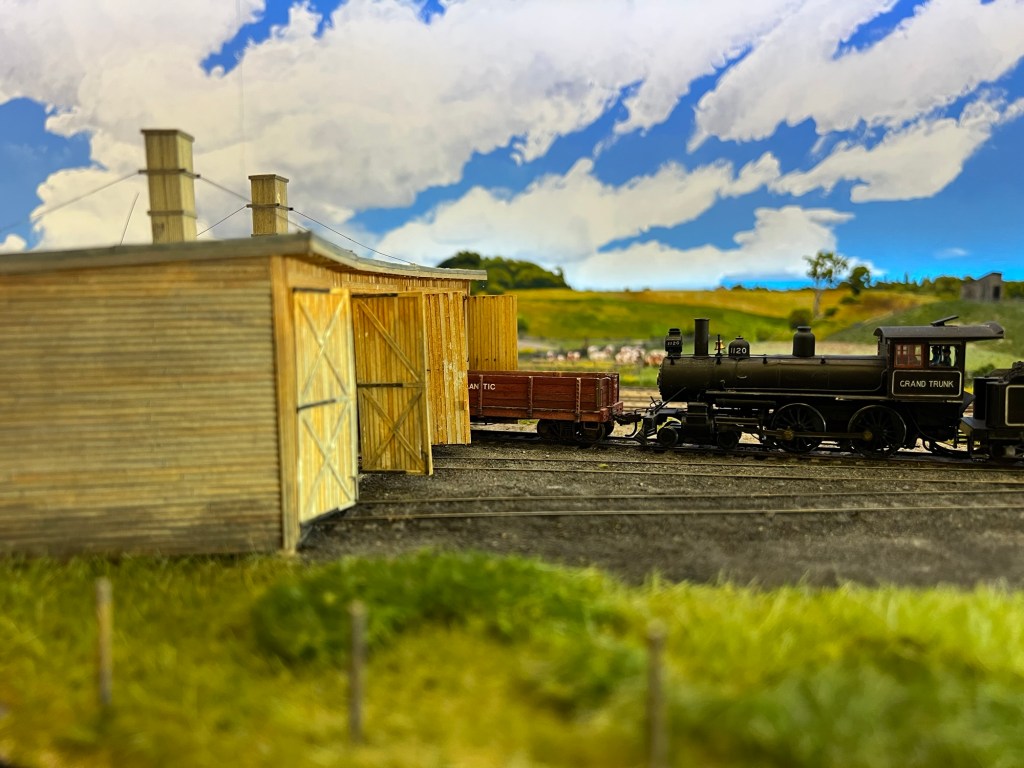
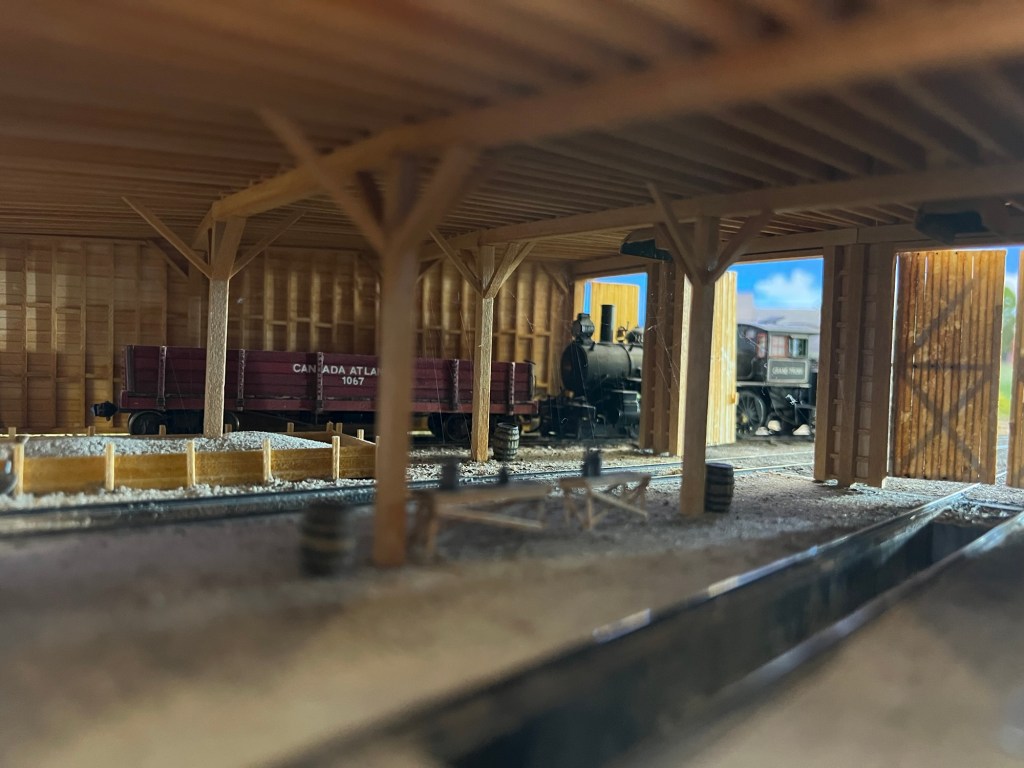
But wait, the freight cars were also small in 1905. The CA flat cars (they had no gondolas, but one could be made from a flatcar when required) only held 40000 lbs, so a car of sand would be needed about every 133 days. That’s still not much, but enough that sand might be delivered in Pembroke’s perpetual August. So, when he visited last week, Brian Rudko brought a car of sand to town.
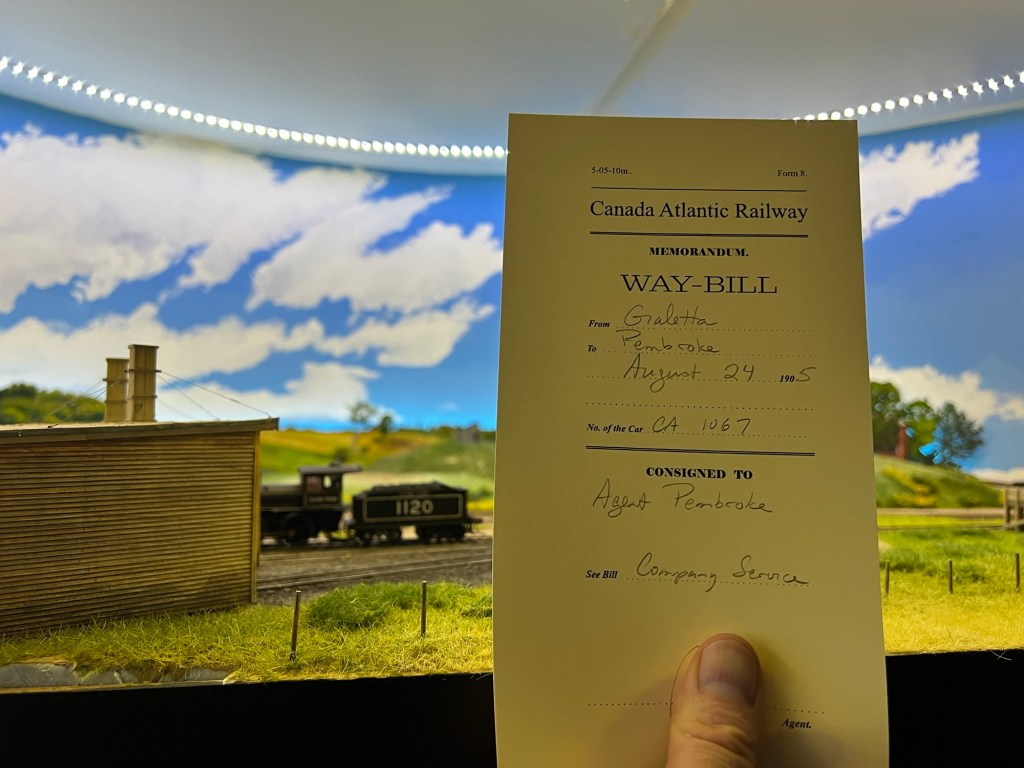
Brian’s delivery also happened to be the first real freight delivery to Pembroke. Sure freight cars have moved, but never with purpose. The gondola of sand, however, came with a waybill, based on real typographically lavish Canada Atlantic waybills. Now that I have a waybill form, I will need to develop a freight operating scheme to go with it. How should I generate traffic for Pembroke?


You’re a software guy… don’t you have to write a program with the help of AI…. And be agile about it?
The question becomes how to randomize the deliveries. I’ve been thinking I’ll have stacks of “routings”. I’d have more routings than cars. Before assigning a routing to cars I could shuffle the stack or not. A routing gets assigned to an empty if online and any car in staging. A routing could be any of the following 1) a waybill with pickup and delivery – two moves 2) routing to a yard or interchange 3) directions to move to offspot to wait for a next routing.
Another aspect of randomness is how many cars are in a train a what kinds…. The kinds could be controlled by the routings. You can have a generator (dice, computer, etc) to decide how many cars.
You may have cars that come to town, but are not for a local industry spot. They got picked up at the last trailing point switch on the line. These cars are filler in the train and are destined to head out.
I’m sure you’ll enjoy determining your system..
Dave K.
nice move! And nice interior view – I’m impressed by the feeling of sunlight “outside”.