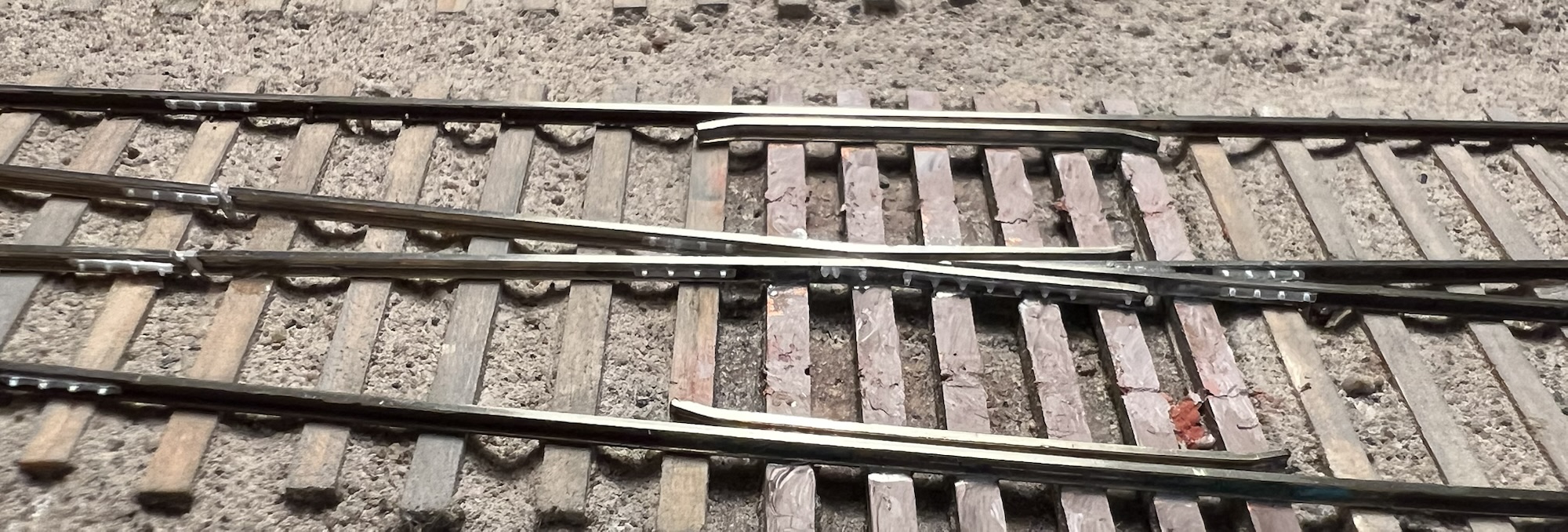
When I first laid the track for Pembroke, I left the detail off until it was running the way I wanted. That day is getting near. There are a few persistent derailments, but I’m getting better and better at fixing them. So, the southern-most two turnouts are starting to get dolled up.
In my previous attempts at detailing track, my hands and eyes were twenty years steadier and sharper, and the track was conveniently placed on a diorama I could take to the workbench. It was easy, therefore, to place individual nut bolt washer castings on the web of the rail. With the Pembroke permanent way fixed firmly five feet off the ground, and the rail web oriented so that the side I could see was at the wrong angle, about a dozen NBWs made it to freedom for every one I captured in dots of glue on the rail.
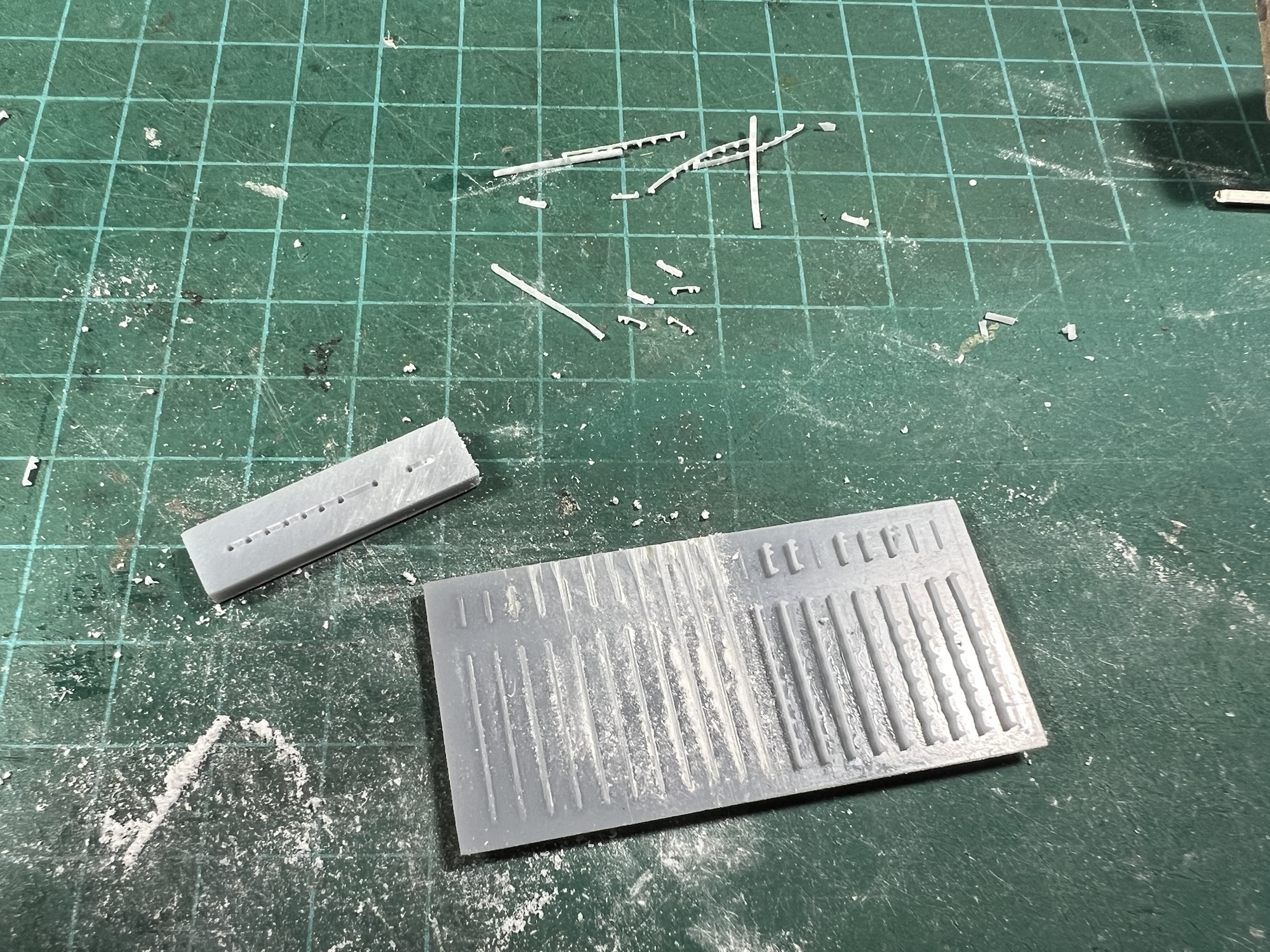
I poorly placed only a couple of NBWs before capitulating. Fortunately, the 3D printer came to my rescue with specially designed strips of bolt heads that fit perfectly on the rail web.
I wanted the strips as thin as possible as the rail head is less than .005″ (.13mm) proud of the rail web. So, I printed them .005″ thick on a special raft, supported for their lengths by a narrow plinth. Then, after many failed attempts, I found that by carefully filing away their backs with my safe-edge file, I could remove much of the thickness before the plinth let go. Usually this left a strip of plastic about .003″ thick holding the bolts together. I then loaded this strip into a special sanding block and rubbed it on a piece of sandpaper, getting it down to about .002″ thick. Printed in ABS-like resin, this strip was very delicate, but workable until it was glued to the rail web.
These strips were much easier to attach to the inconveniently-placed frogs at the throat of Pembroke’s yard. And naturally, the bolt heads are all the right distance apart.
 Pembroke:87
Looking good Rene! You don’t say what code (size) rail you’re using but I’m sure it’s probably code 40 for your era! Maybe you will have a new business opportunity with your bolt strips……….?
Hi Jim, Code 40 is actually a little light for the Canada Atlantic. So I went with Code 55.