With the perfect weather for model railroading this weekend, the coal car trucks have cleared the workbench. Some loco-building supplies have arrived, and I’m going to return to locomotive work for the next little while – except for a couple of weeks of travel that are coming up this month.
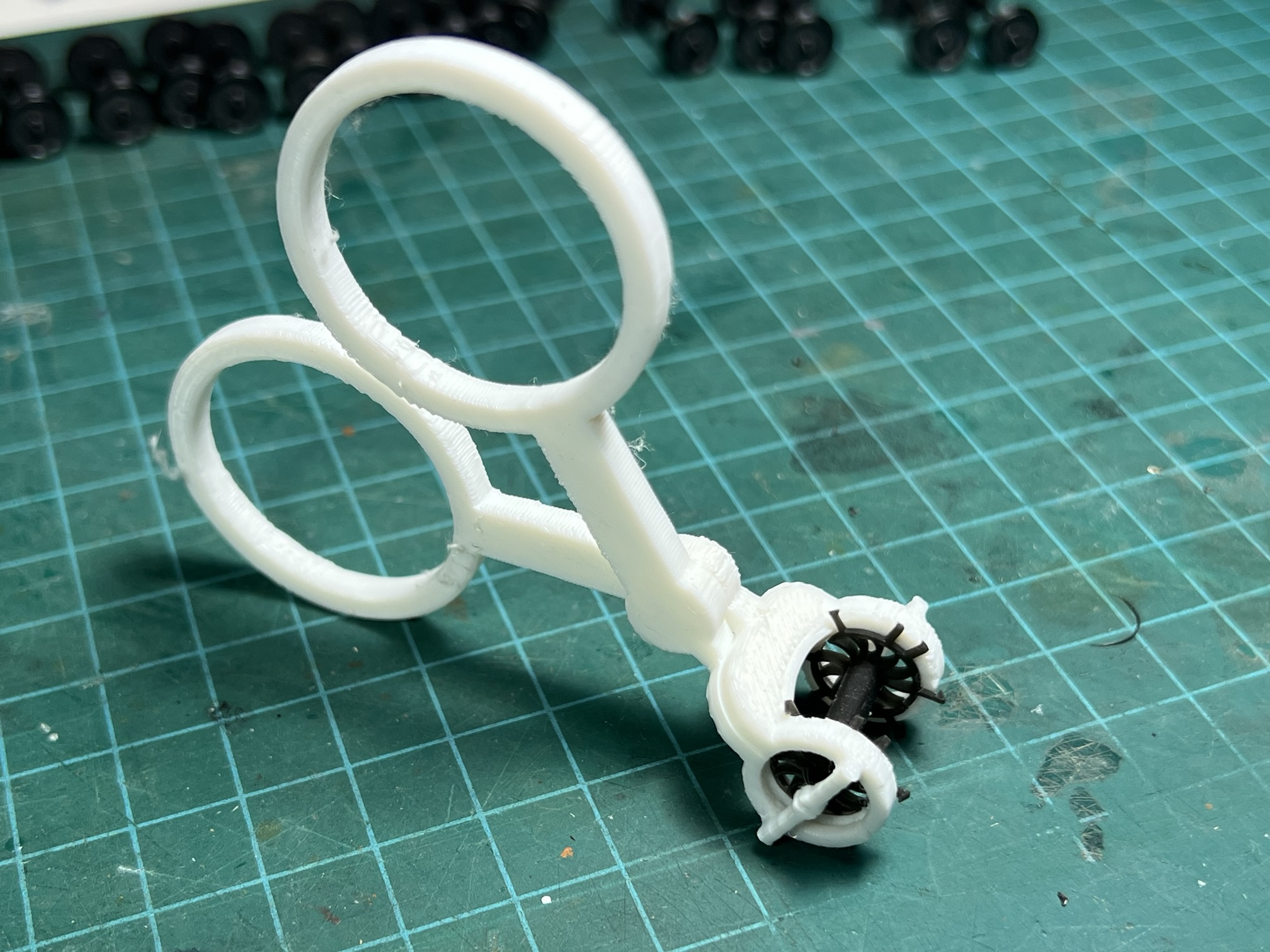
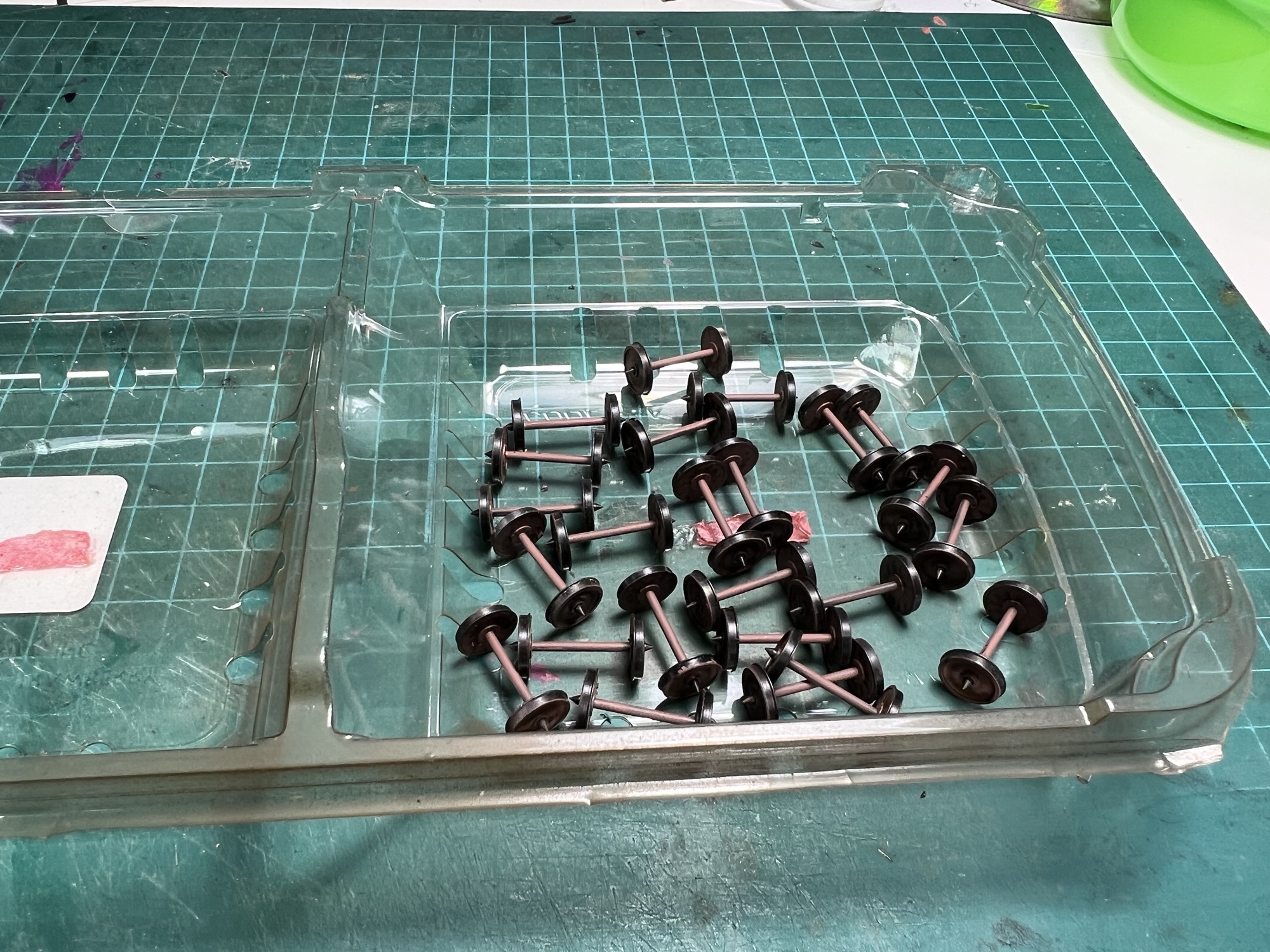
With the success of the masker/holder for trucks, I devised a similar contraption for holding onto wheels while masking the treads and the axle ends. My usual method is to paint wheels by hand, thereby missing these critical surfaces. However, with 28 wheelsets to complete, I decided a new system was worth it. The initial design worked very well, and allowed only a tiny overspray of Vallejo “Rust” onto the treads of some wheels.
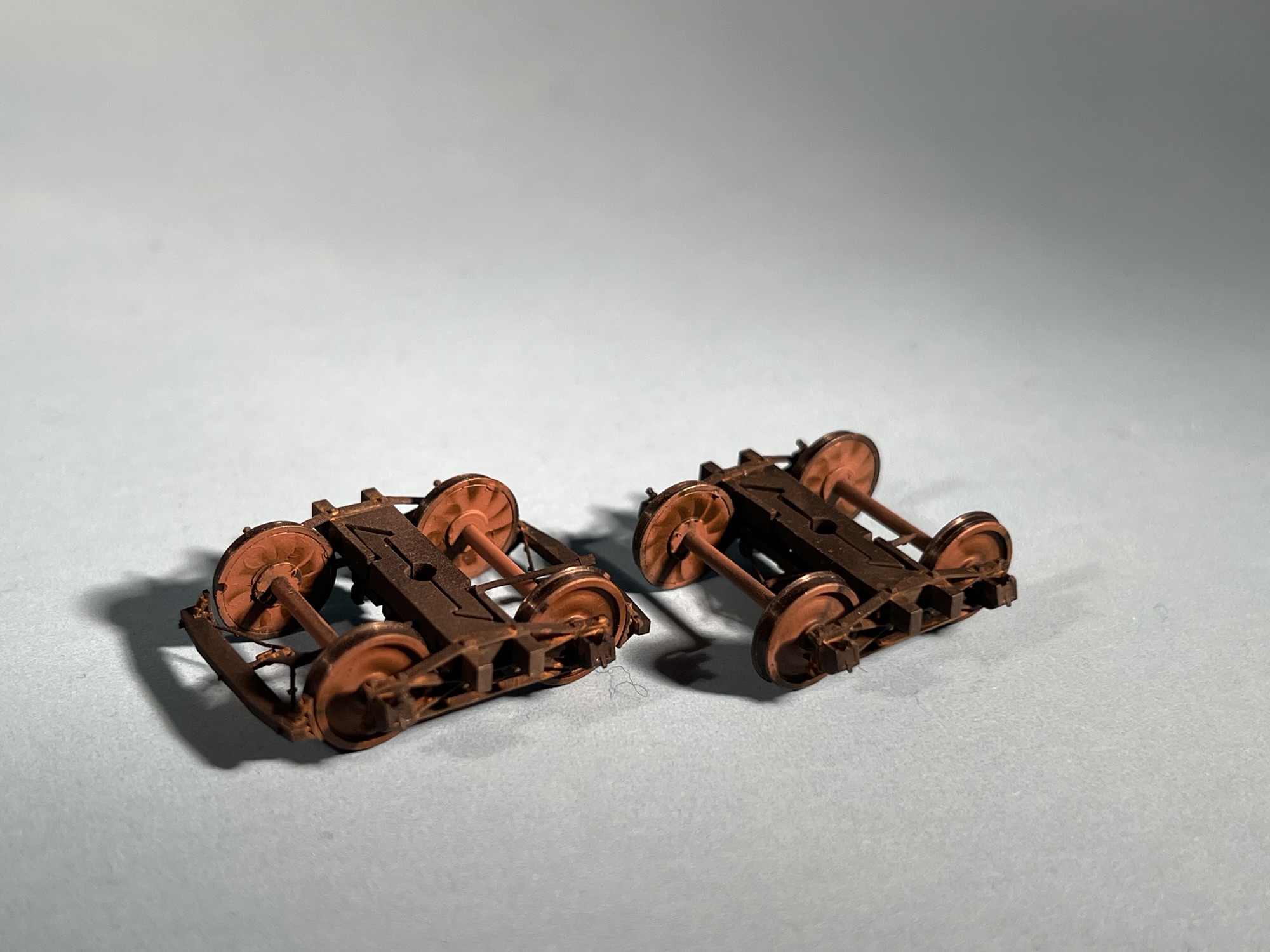
Once I had the masker/holder for wheels, I realized I could finally try out an idea I’ve been mulling over for decades. All solid P:87 wheels that have ever been available on the market have had plain backs. However, in the early days, wheels had fins on the back to aid in cooling during the casting process. I’ve always thought the missing detail could be captured with tromp-l’oeil, but until now I couldn’t see how to efficiently create a mask to do so.
The first attempt where I printed the mask on the FDM printer produced some lovely balls of filament where the detail should be. In the second attempt, I resin-printed an insert for the same holder that masked the wheel treads and axle ends, and popped it in place after the rust had dried. I then sprayed Vallejo “Smoke” onto the faces of the wheels to represent the oily grime that accumulates there. I sprayed the same colour through the mask to represent the shadows of the cooling fins. It sort of worked, but not consistently. I’d made the mask too deep, and it was difficult to get paint through and onto the surface behind. Still, the tool shows promise and the next 28 wheelsets I paint will be better.
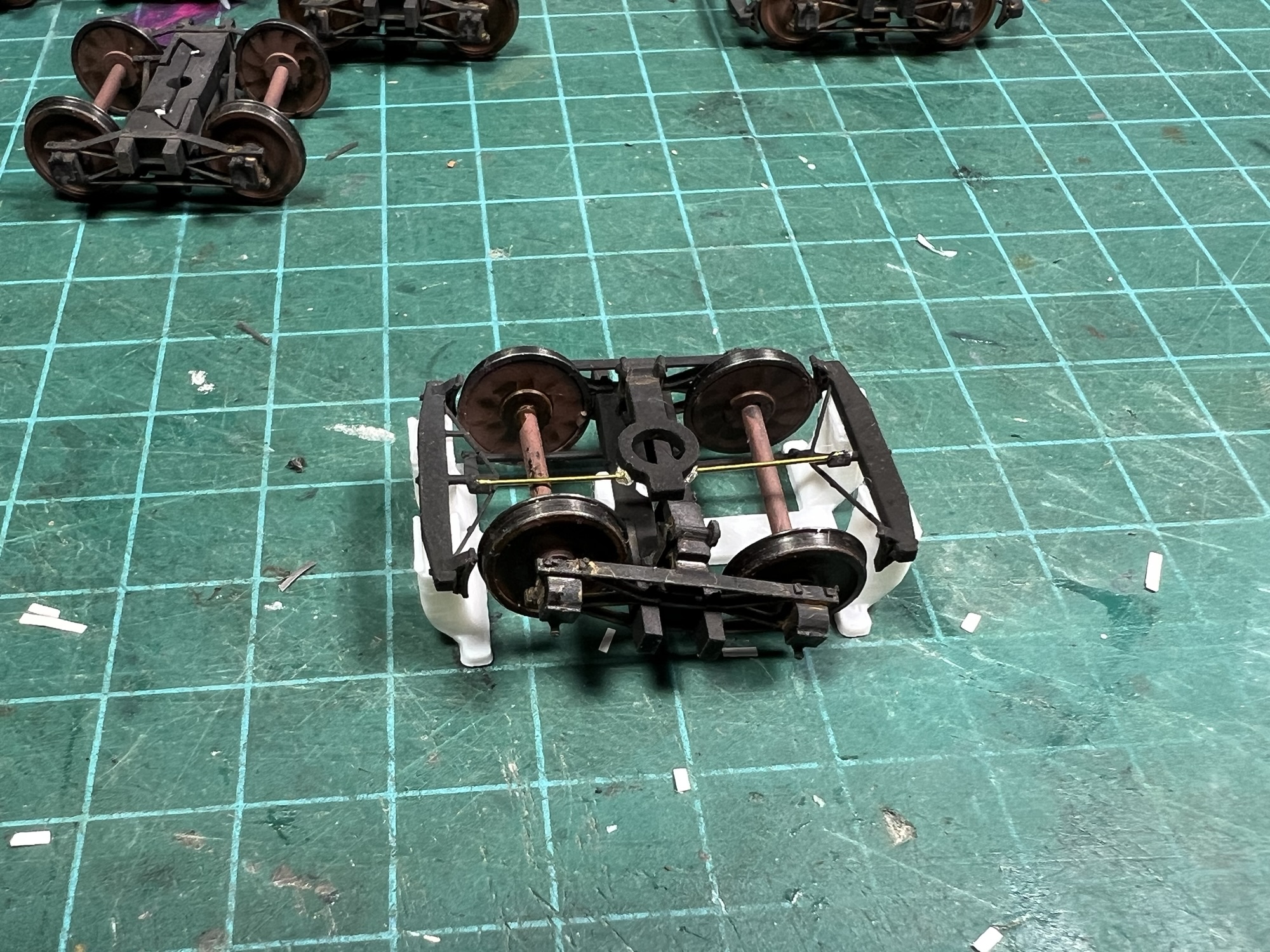
Once the wheelsets were all coloured, it was a simple matter to put them into trucks. The outside-braced trucks required the addition of the lower brake rod. I might have left these off as they permanently capture the wheels. However, without them the brake beams are not stable, and risk catching on, well, everything. The jig I designed for aligning the brake beams was very helpful, but even with it, I found it challenging to thread the .015″ brass wire through the truck and into the recesses in the clevises. E6000 construction adhesive on the spring plank helped because it is tacky and slow-setting.
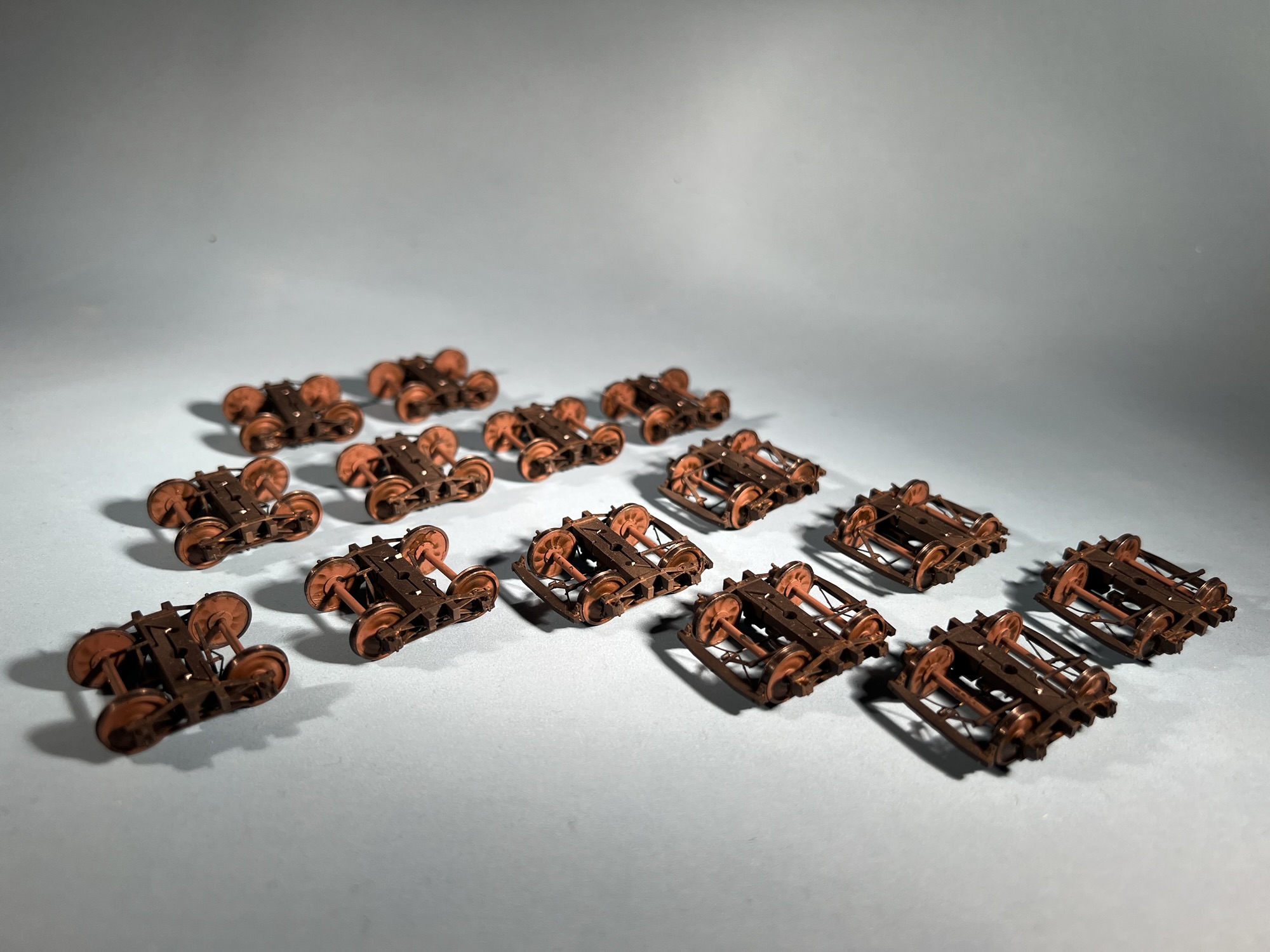
 Pembroke:87
… very nice result Rene!
Thank-you!