Nowadays, the cool kids are all using static grass to make the tiny lesser branches and twigs for their trees. As with my leather tie and Adidas bag, I tried to copy them, but the look fell flat. My static grass mostly missed the mark, and the few fibres that connected clung to the armature the way my friends and I gripped the walls at the dance, rather than sticking out proudly like the senior football team or like branches of a tree.
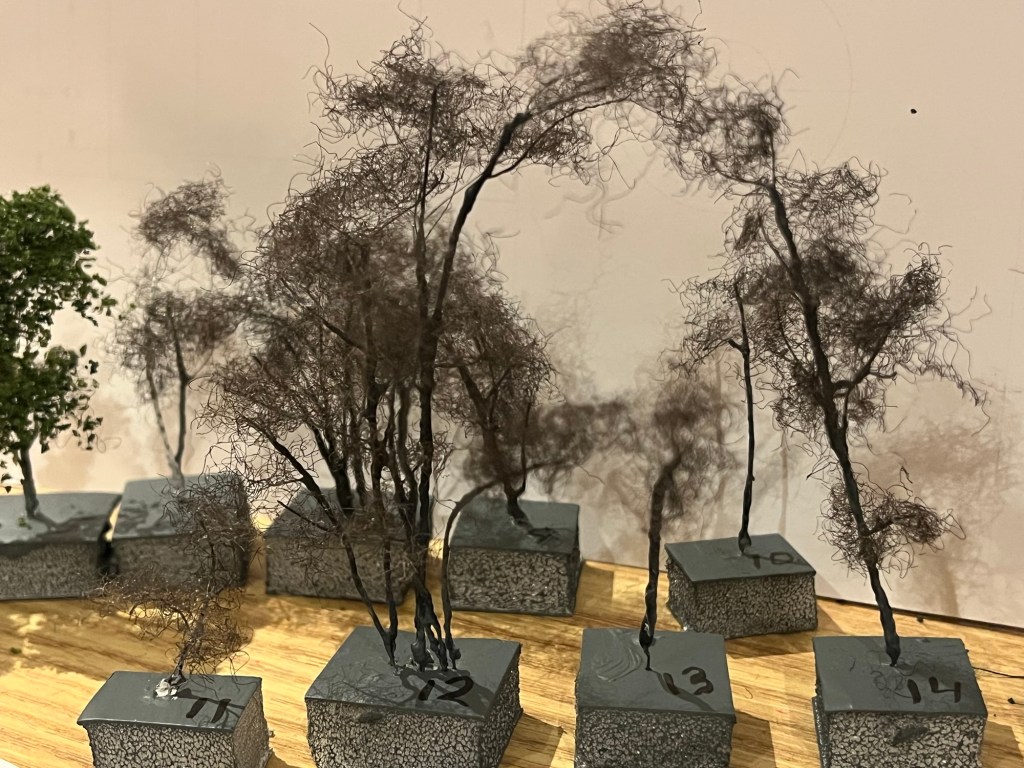
I contented myself with sipping the constantly-guarded punch and went back to polyfibre for branch structure. For each tree, I selected a small amount of painted brown polyfibre and stretched that out further until it barely held together. Aileen tacked the twig structure to the wire branches, and the resulting worktop looked enough like a forest in winter to convince me I was on the right track.
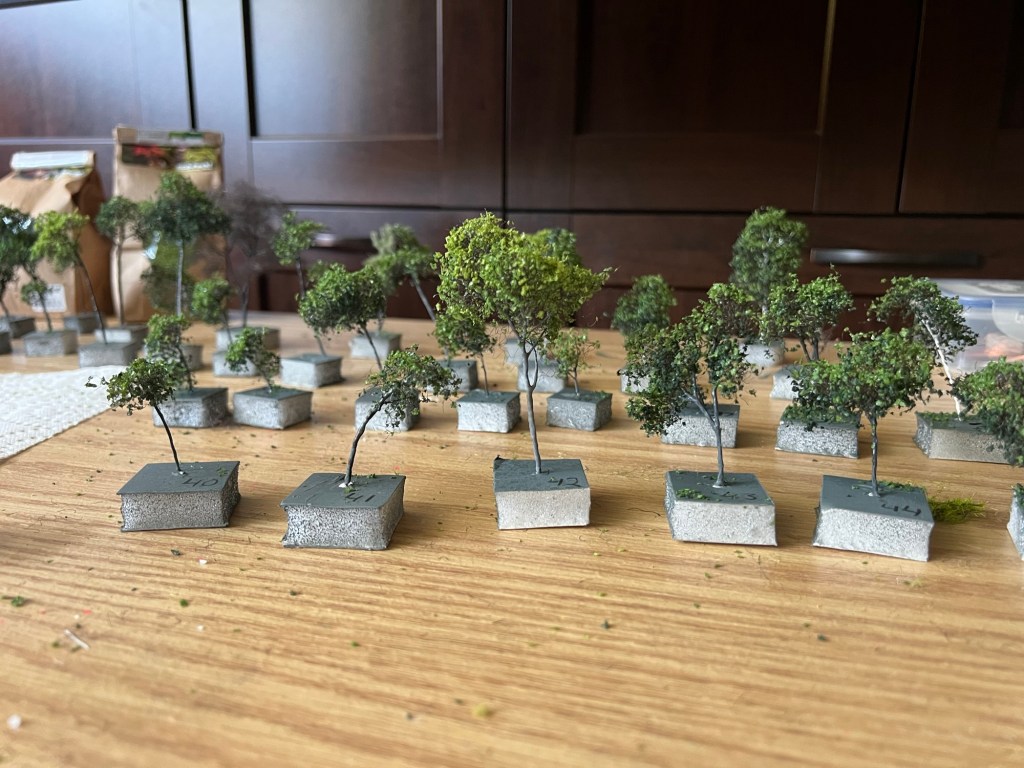
I stayed with Super Leaves for decorating the trees. Most of the trees in the thicket have medium green leaves, but there were a few distinctly brighter ones and one overachieving maple tree with noticeably larger leaves. The maple tree trunk was easy to identify as tree number 16. The lighter green trees were impossible to tease out of the mass, and so I selected a few trees that were in the right areas, and assigned them the light-green species, whether they deserved it or not.
I applied the hairspray and leaves in the spray booth. The spray may be benign in the quantity you’d apply to your hair, but not for a forest. It took several trees to learn that it was possible to avoid blowing the polyfibre off the tree. By starting away from the tree, I could modulate the spray so that it came out gently and nicely saturated the twigs without getting a lot of spray on the trunk. I then quickly sprinkled dark leaves from below and to the side, followed by some medium green leaves from above and to the side. Most trees needed only one sprinkling. My species-assigned trees got medium and spring green Super Leaves.
For the maple, I wanted bigger leaves. I found some appropriate flakes from Mountain Pacific in my scenery drawer. They were a lighter, bluer green than the Scenic Express leaves, and so I hand-painted them after they were stuck to the tree. The colour is still too blue, but hopefully it’s in the ballpark.
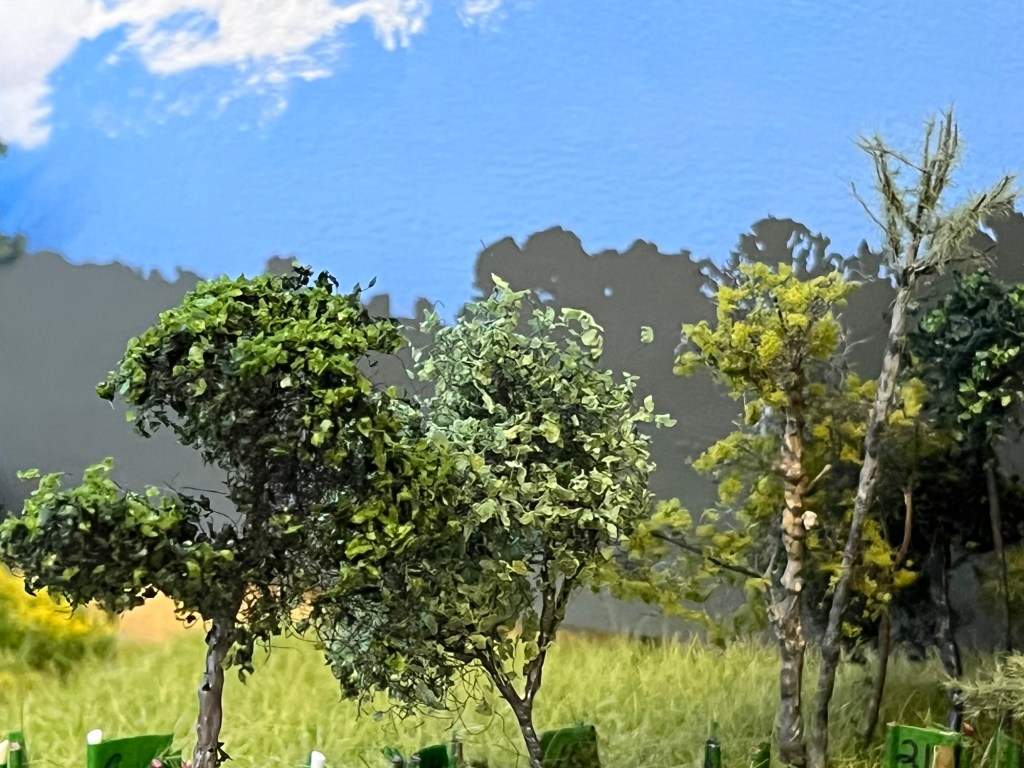
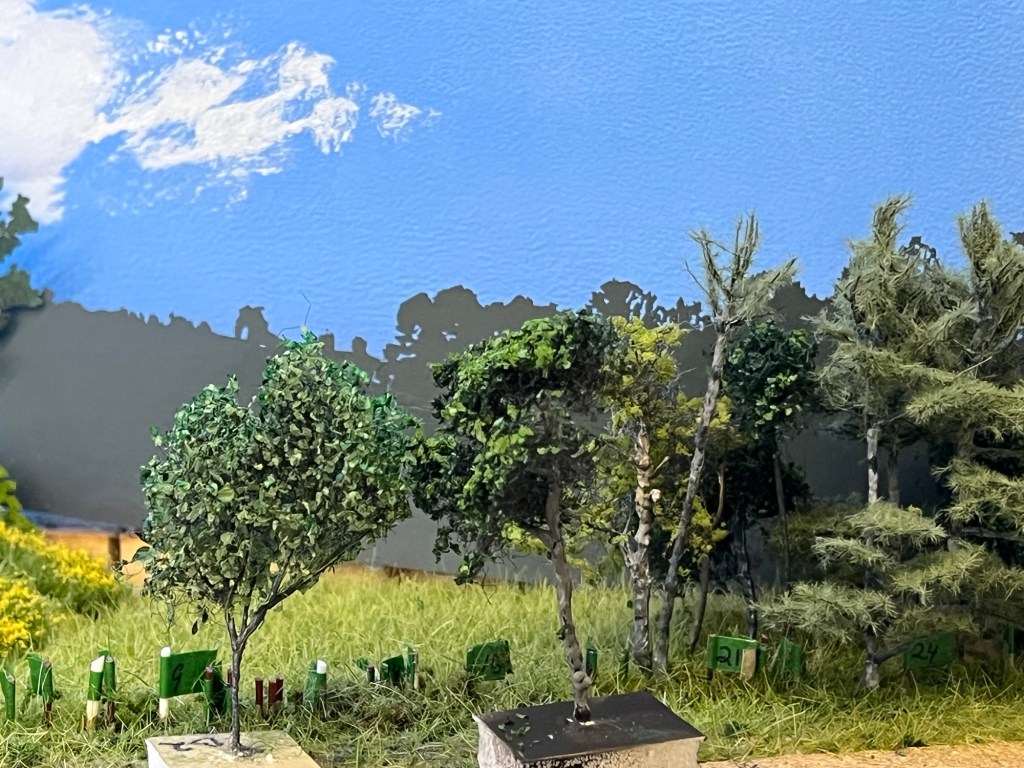
Apart from the maple trees, leafing went quickly and I soon had a desk full of trees, any one of which would pass scrutiny by itself.


Your recent blogs have been so engaging, Rene. FYI, last week? I wrote a thoughtful reply to one and lost it when I tried to send. After half an hour, ether. It was in response to the one about your pines. I proposed that AY Jackson and Tom Thompson were having a yak about pines using quotes from your blog. In this fiction, Jackson was proud of his rendering of some scraggly ones in his paintings, “The Thicket.” And BTW, I am back to my layout after too long. Working on foundation for scenery next to the Kenny Lift- and beyond. Beyond the ancient temporary eyesores I’ve been trying to ignore for too long. Your blogs and an update from an old Trainlife pal from 2011 or 12 have caught my imagination, so I am excited about making some of my old MR dreams come true. Graham
Get Outlook for Androidhttps://aka.ms/AAb9ysg ________________________________
I’m so happy to hear you’re back at it, Graham!
I’d like to hear more about the painting of the Mountain Pacific leaves (or any others you tried). Mostly, I am curious about how the leaf material accepted the paint – and how wet you applied it. I have a couple of trees somewhere around here that needed a little help and never took the plunge.
I used acrylic paint thinned to watercolour consistency. I didn’t feel like getting out the airbrush, but if I’d had many to do, I would have. The leaves appear to be a paper product, and soaked up the paint thirstily. They’re delicate, though and the surface tension sometimes pulled leaves away, which would be another good reason to spray them.