With house guests encamped in the workshop, I turned my attention to tasks that were appropriate for the dining room table. I picked up some Invisafil fine thread from a sewing store near the hobby shop, and made myself a little crochet hook. The finer thread was much more consistent and less aggravating than teasing all-purpose thread apart. By the time I had completed the twenty lengths of chain required for the four cars, I was in a bit of a rhythm, and could have made much more.
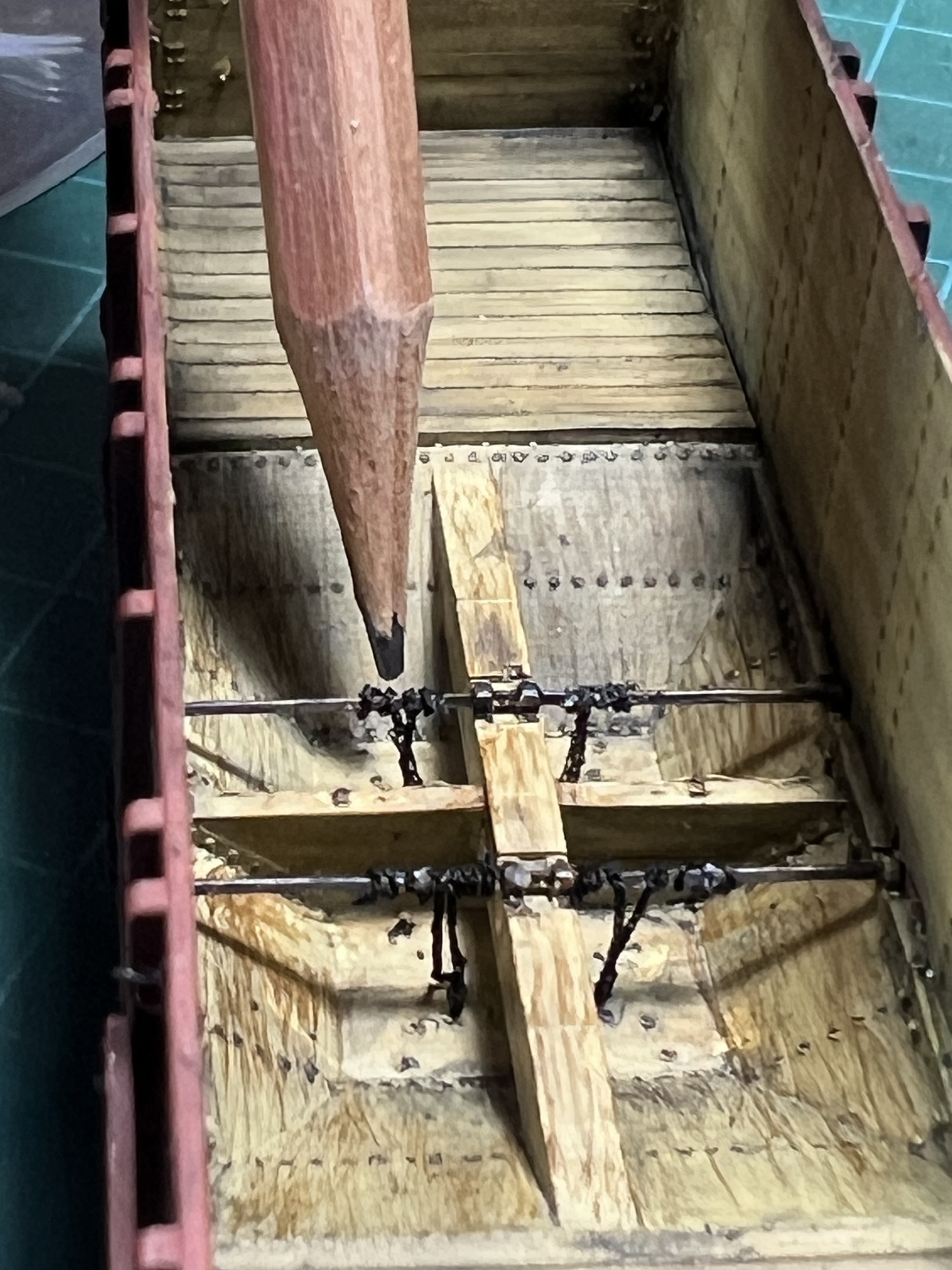
Installation came after my guests left. Thanks to my novice crochet technique, the chains were inclined to curl, making their manipulation especially tricky. Threading the chains under the lifting rods, affixing them to the doors and then spooling them around the rods again, took two pairs of tweezers, a screw driver, and a pin in a pin vise. It was as close to practising surgery as I hope to get!
I had painted the outside of the cars with Polly Scale Mineral Red before the guests arrived, and so I was able to begin applying decals at the dining table too. Bill Brillinger at Precision Design Co provided these with his usual alacrity well before they were needed. I find lettering starts to bring railroad equipment to life, and these cars started to look like real models with the crisp white block letters.
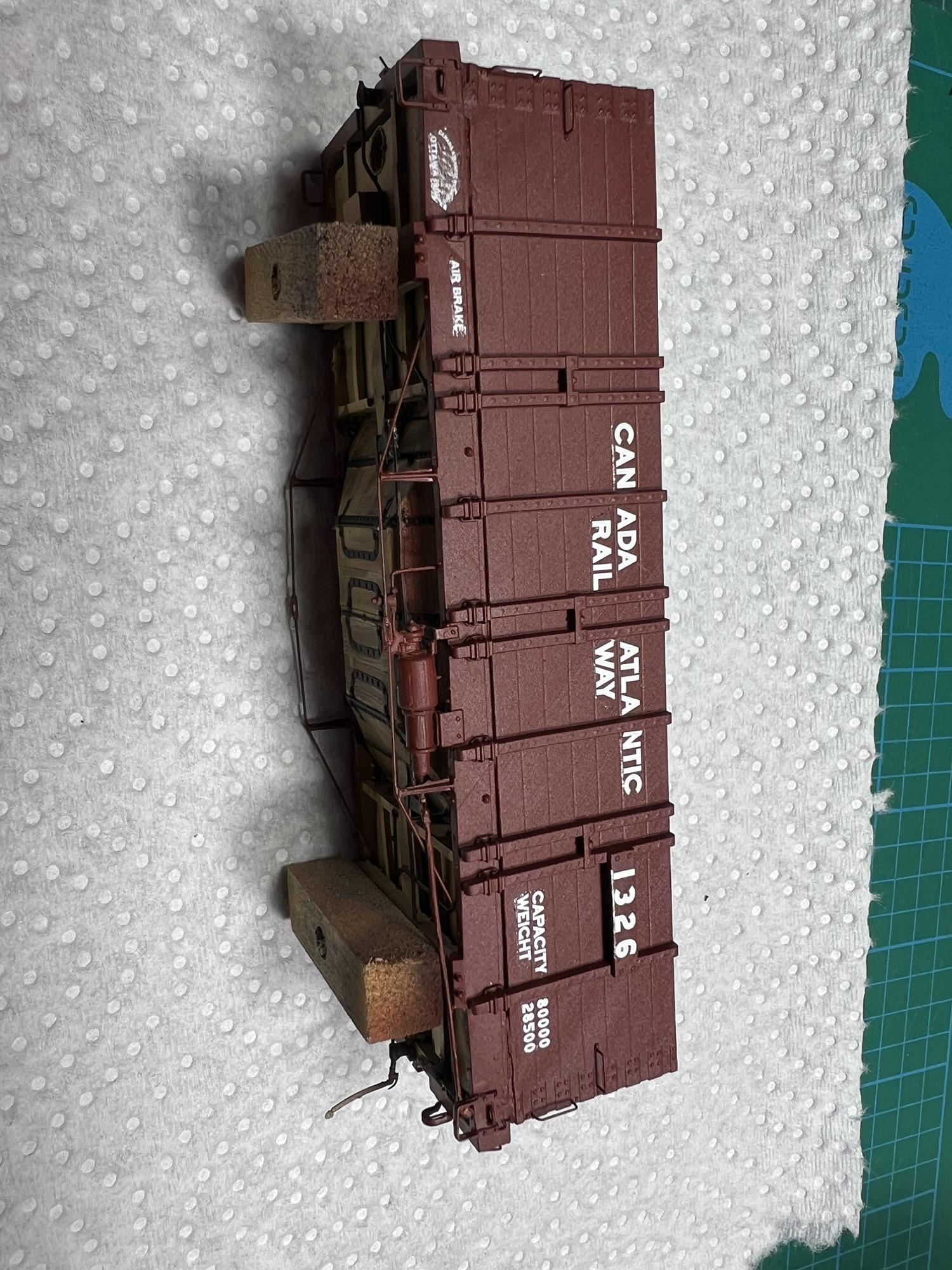
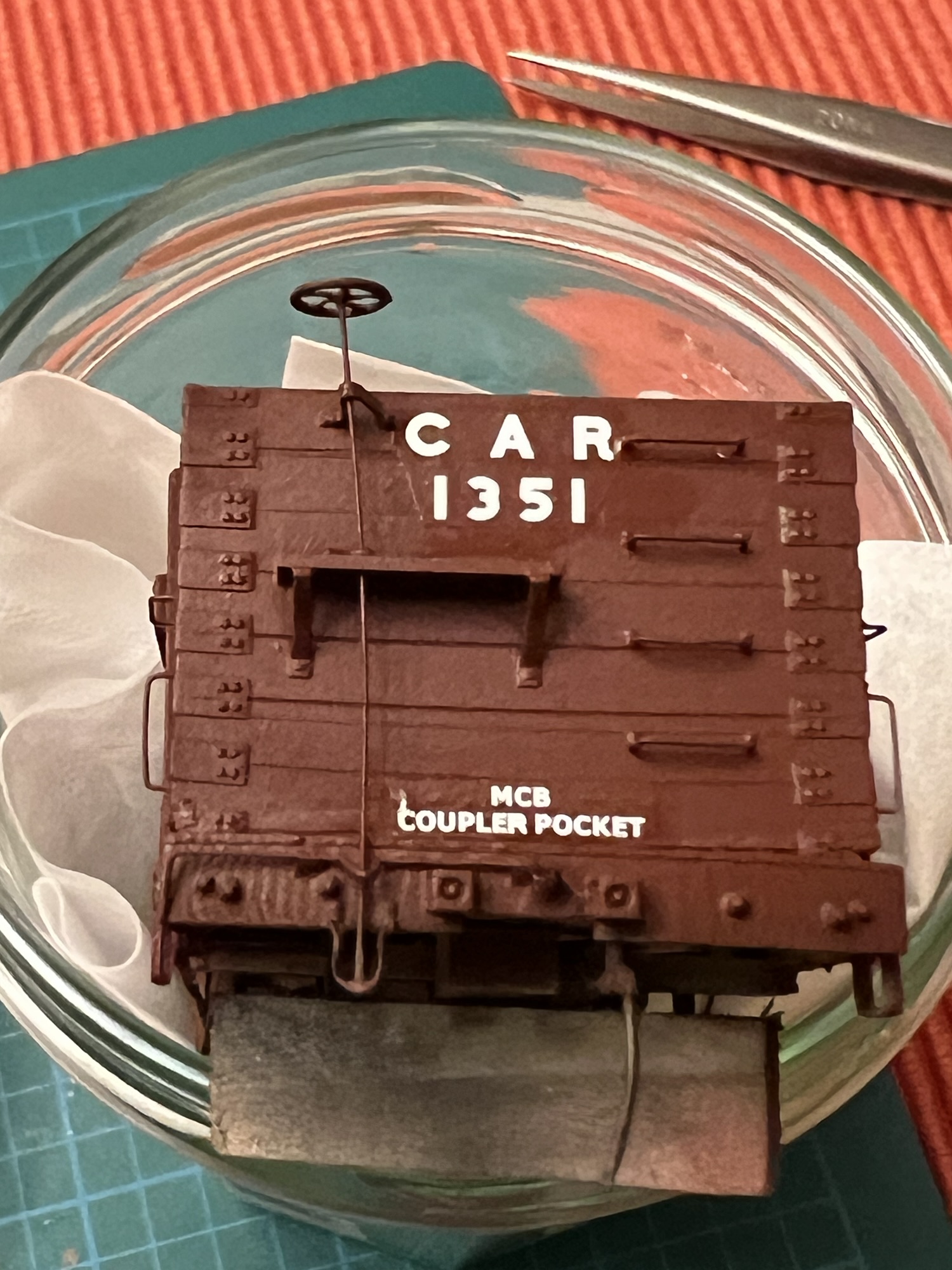
I washed black oil paint over the sides to make the cars look like they carried coal, and then I dug the trucks and couplers out of storage and around midnight on the night before the meet, screwed them all to their locations.
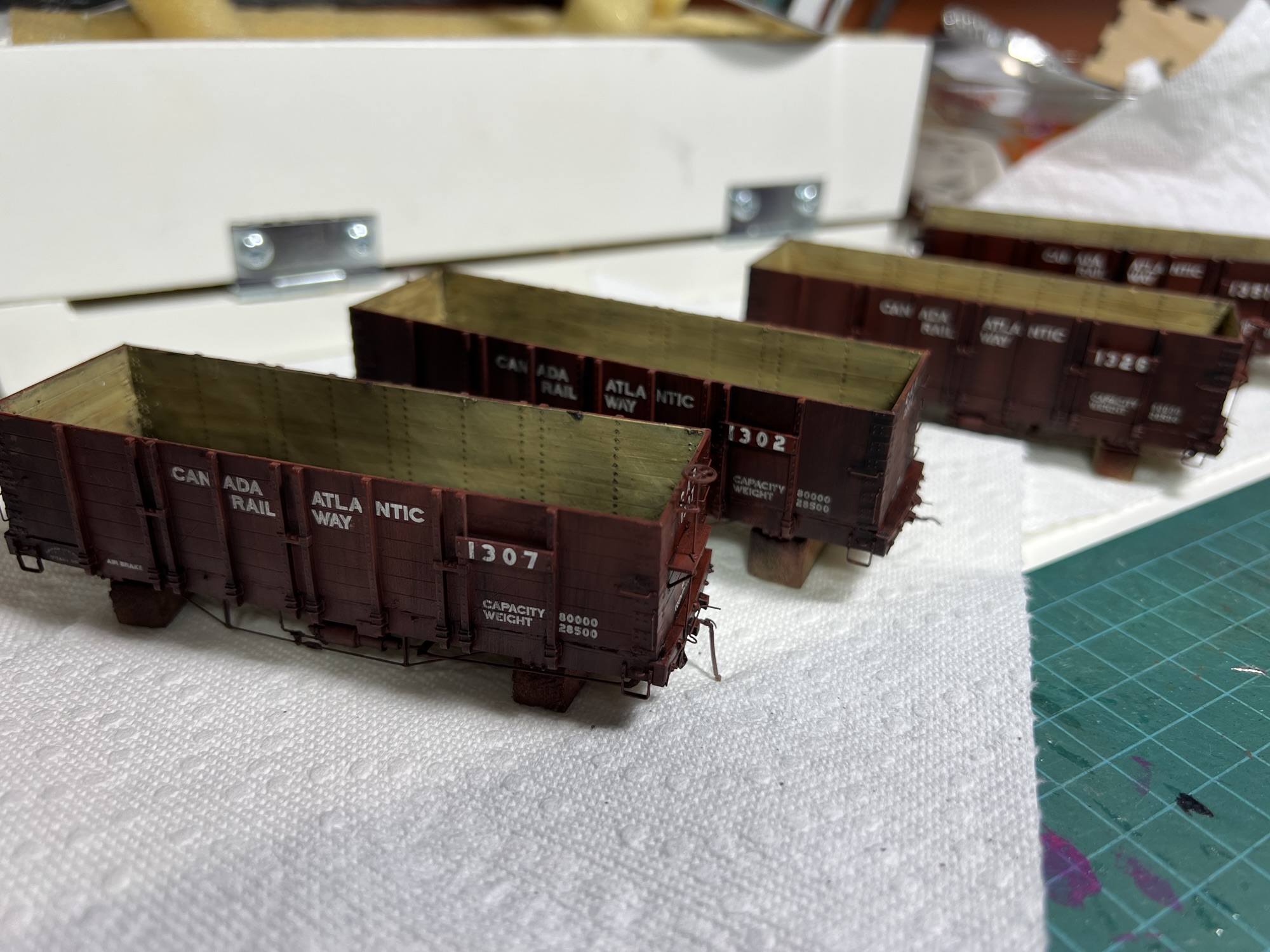
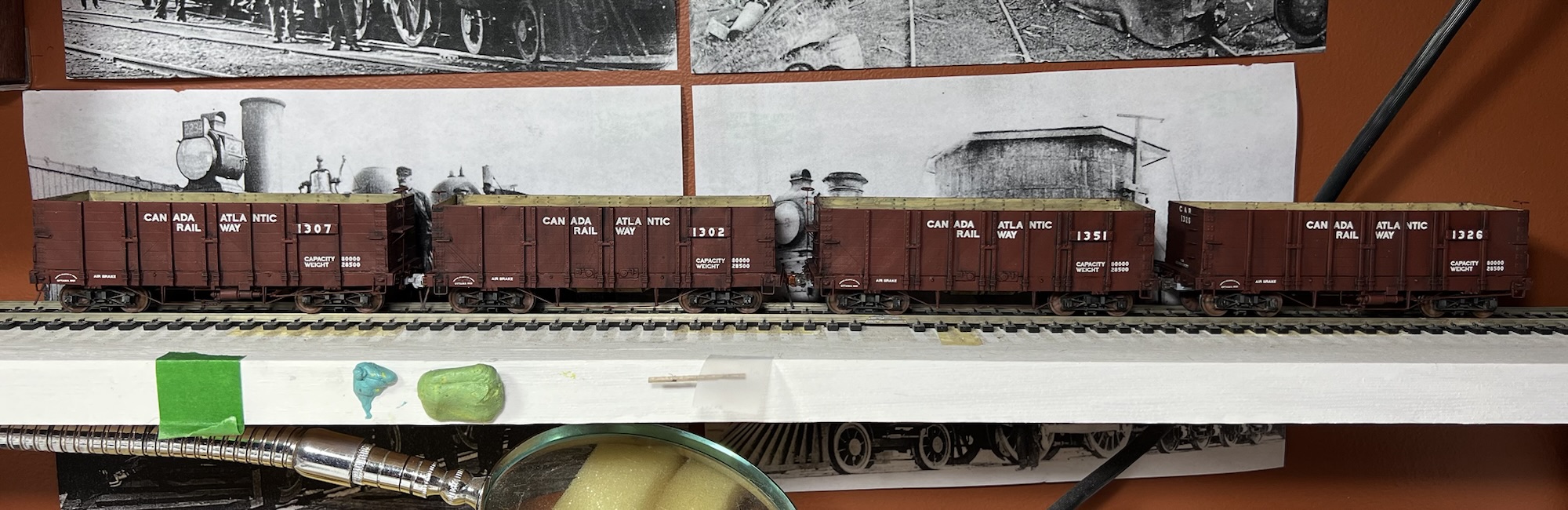
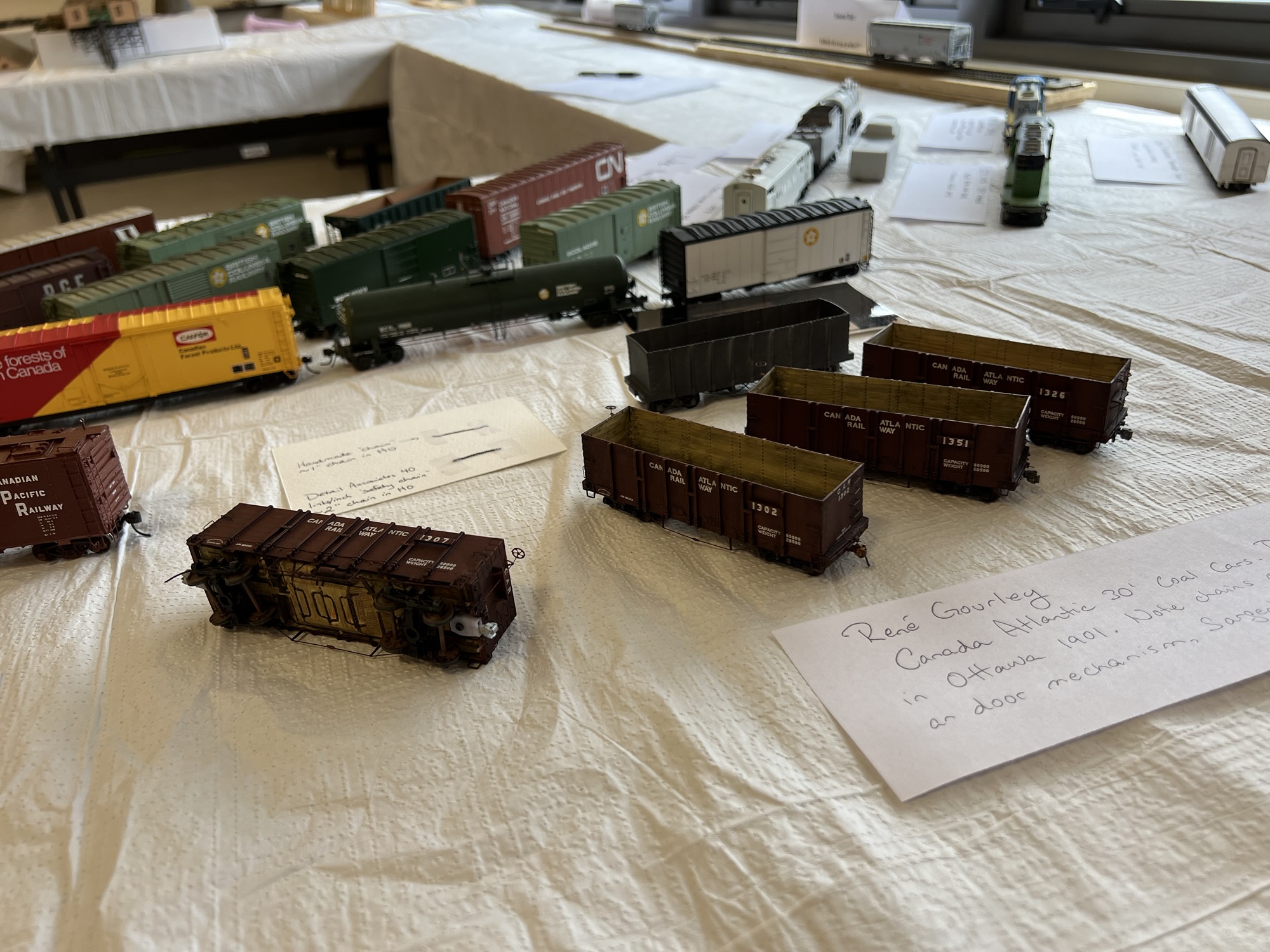
We had a good turnout of models for the meet, thanks in part to a big display honouring Marc Simpson, and thanks also to some of our visitors from Calgary. It may only have been four cars, but I’m glad I had something to show! There is still more to complete on these models; fortunately, we welcome unfinished models at the meet.


… inspiring stuff Rene!
Great to see those cars come to life! Are you or anyone going to do a recap of the RMM displays by chance?
I took photos and will post them soon.