Using a paper template, I jig-sawed a plywood base for the thicket. The plywood is 6mm thick, and so, I cut the cork away to bring the new landform closer in height to the edge of the pasture. With a little luck, I won’t have to fill the gap between the two sections as it is a difficult place to get to!
To locate all the trees, I extended lines from their trunks below the photograph in InkScape, and then estimated their relative depths in the scene. Then I printed the resulting crosses and glued the paper to the plywood base, which of course caused the base to curl within 24 hours.
Based on the first test, I felt the thicket needed to be about 25% wider to span the space. So, I resized all the parts and re-printed it. I should then have mocked that up to see what it looked like, and I guess I did, except I also printed all the individual trees and stuck them into the base at the expense of many real trees’ worth of paper.
Running a train past the thicket, gives a sense of scale. At 45 feet tall, these are now quite large trees considering they’re not the primeval Ontario forest, but bush that has either invaded a patch of land beside the railway or was left over after all the good trees had been harvested. The real thicket has been growing for about 20 years. However, I’m going to run trains past it for a few days to give it a chance to grow on me (so to speak).
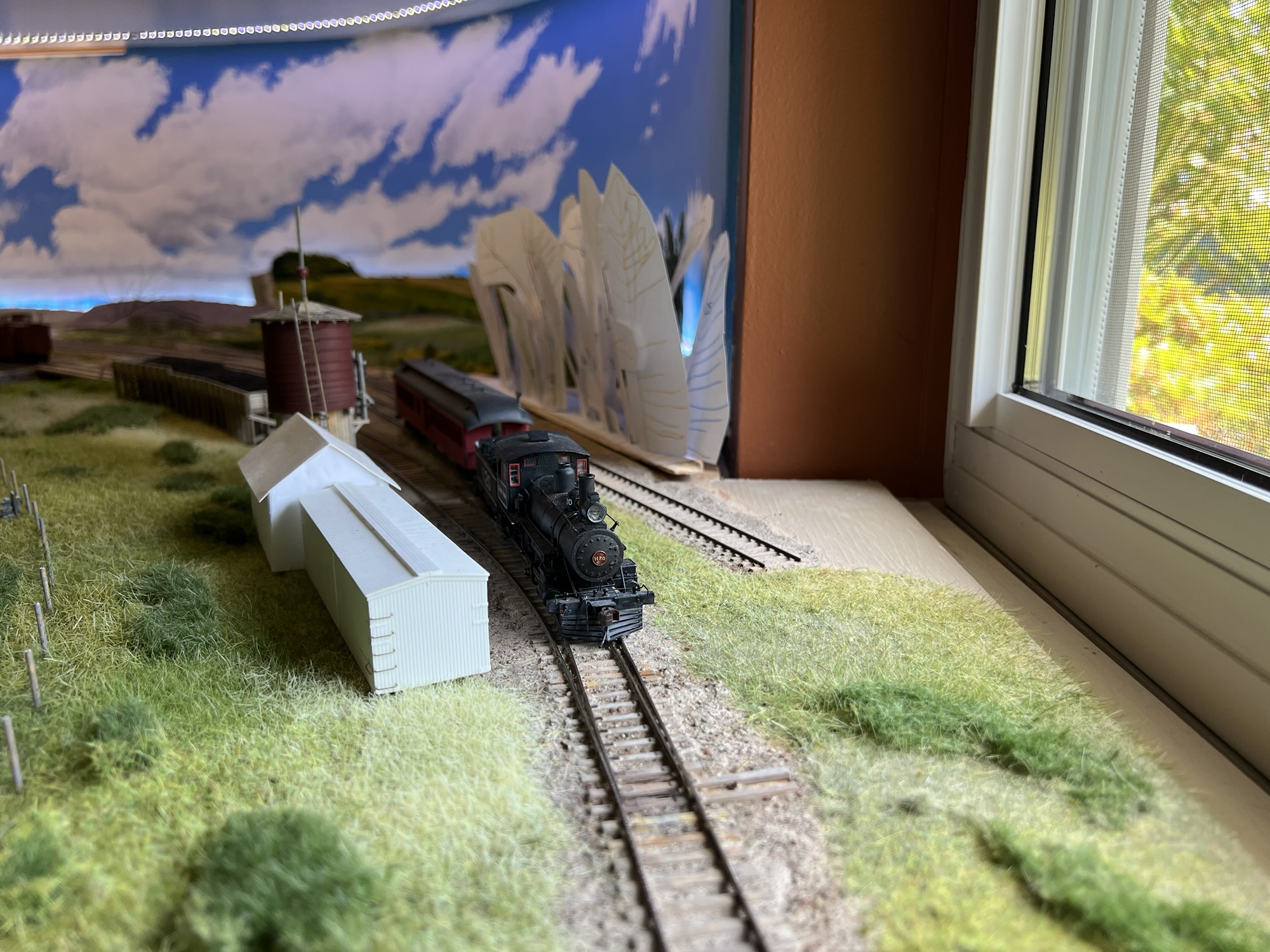
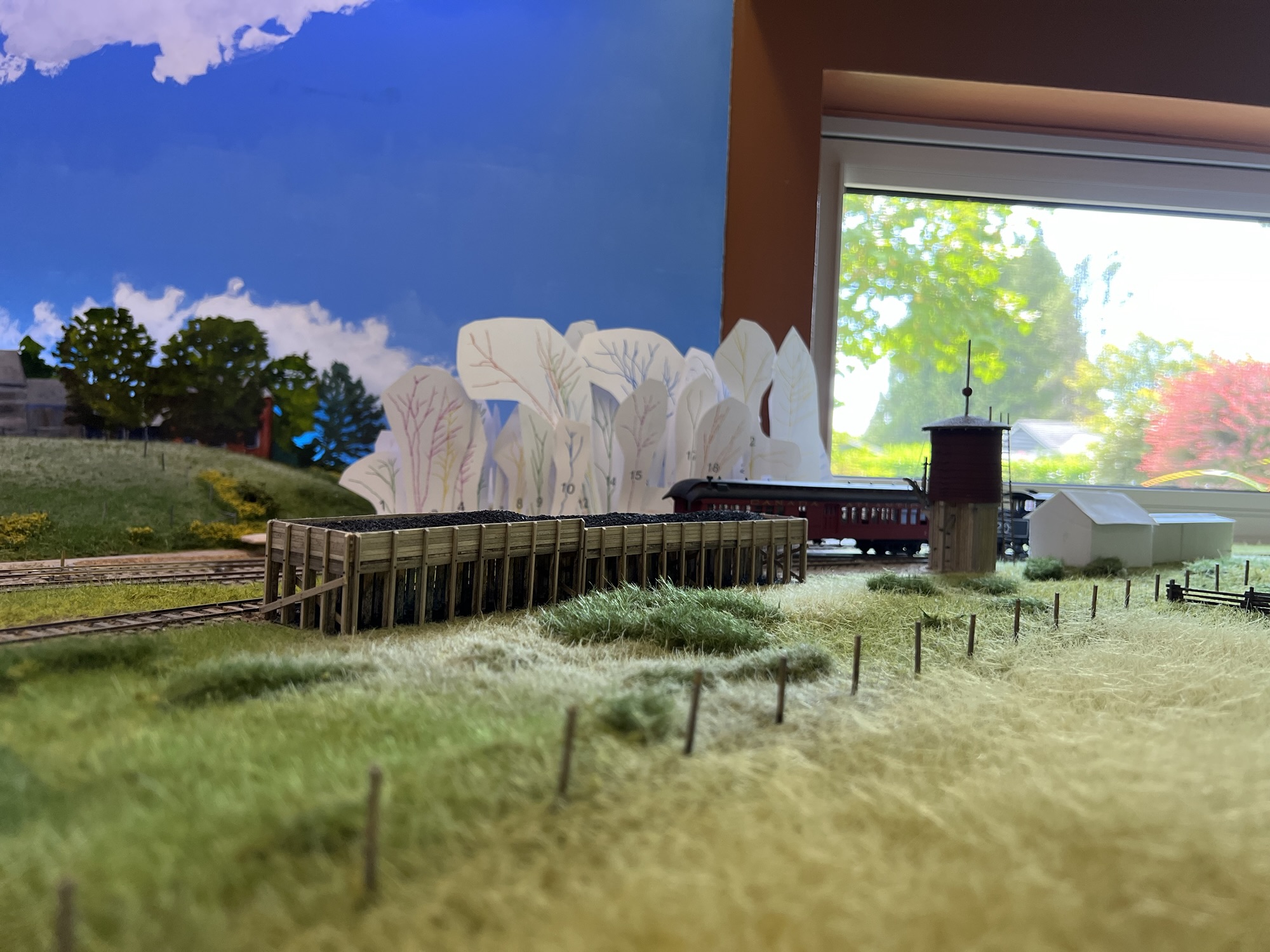
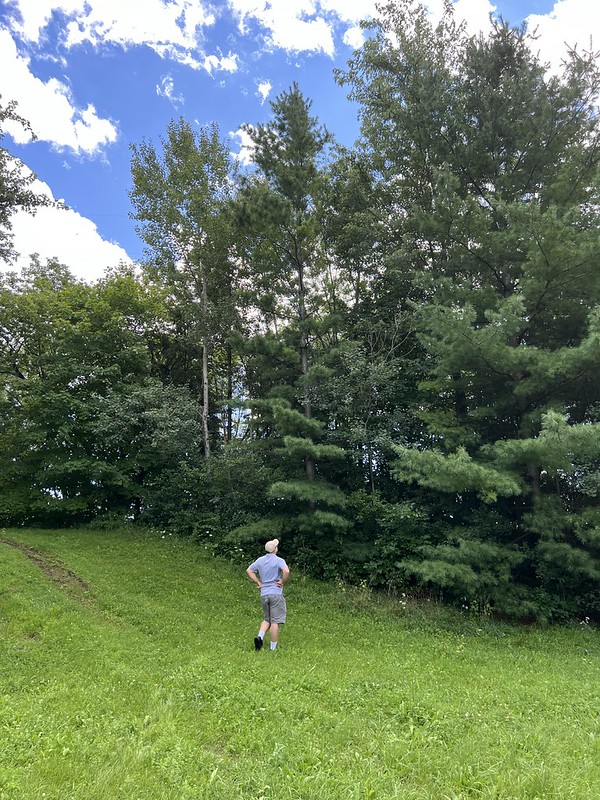
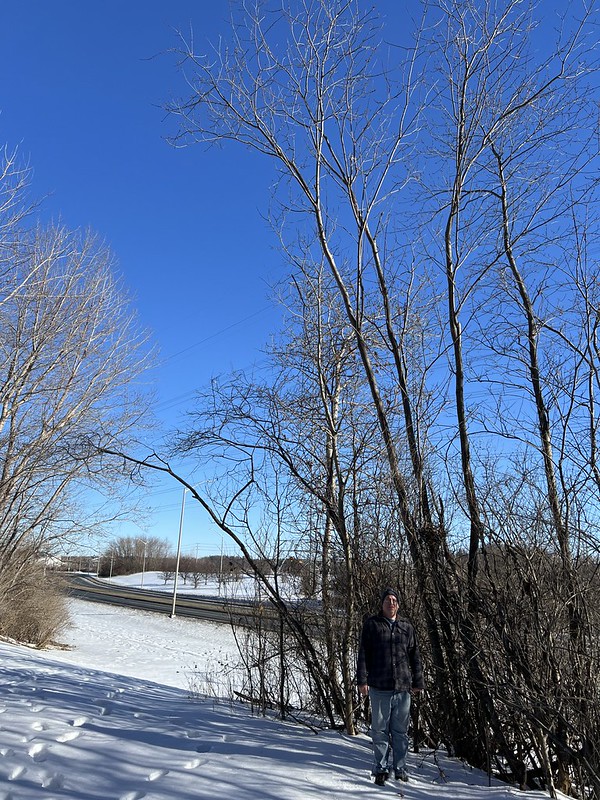
While this version of the thicket was percolating, I had a copy of the reference photo propped in the channel that surrounds the layout. I noticed that it made an interesting view block there in the corner. I had been thinking about a fence-line tree or two, but now I’m also thinking about another bit of bush. Could this at last be the “spinney”?
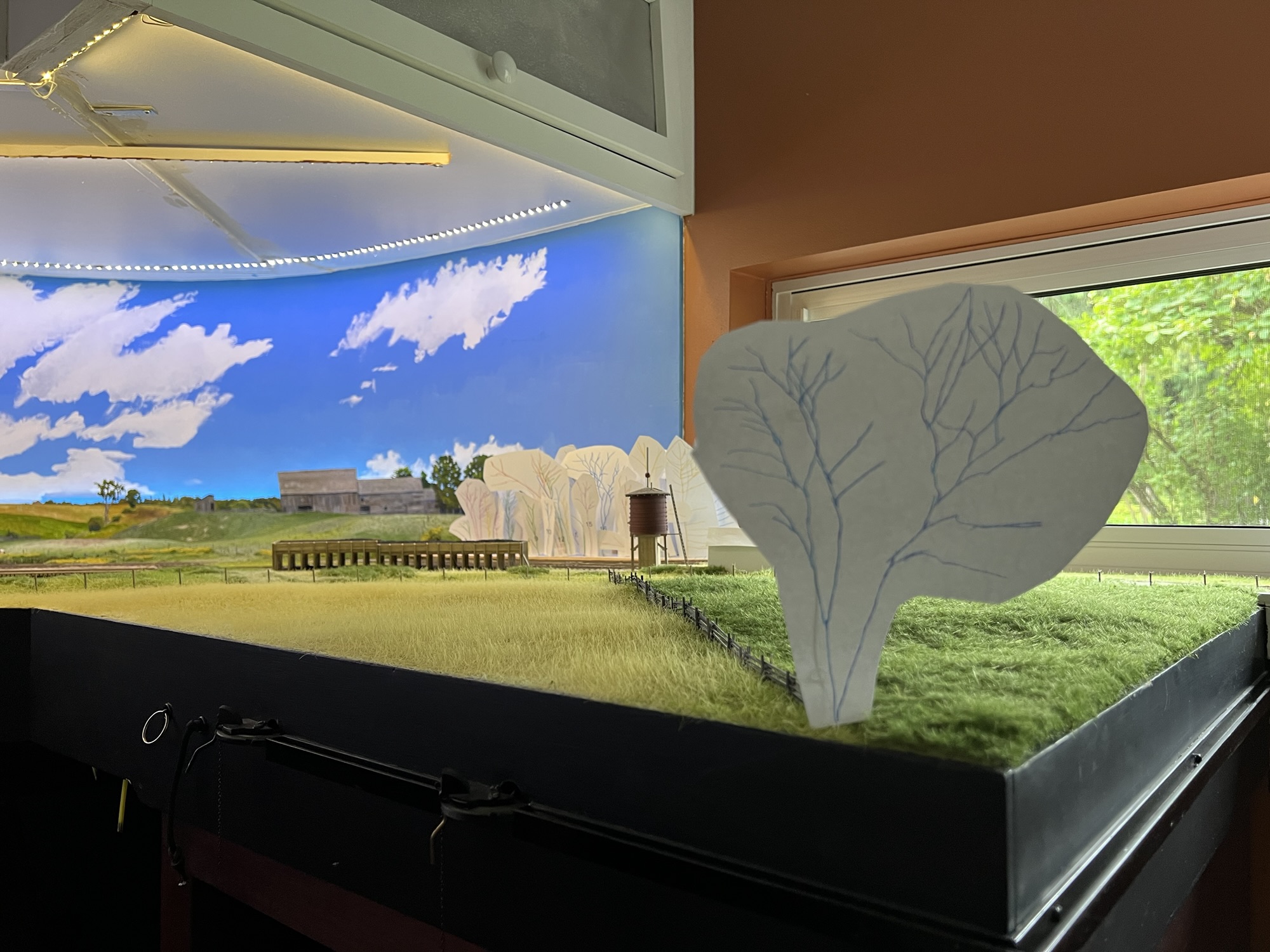
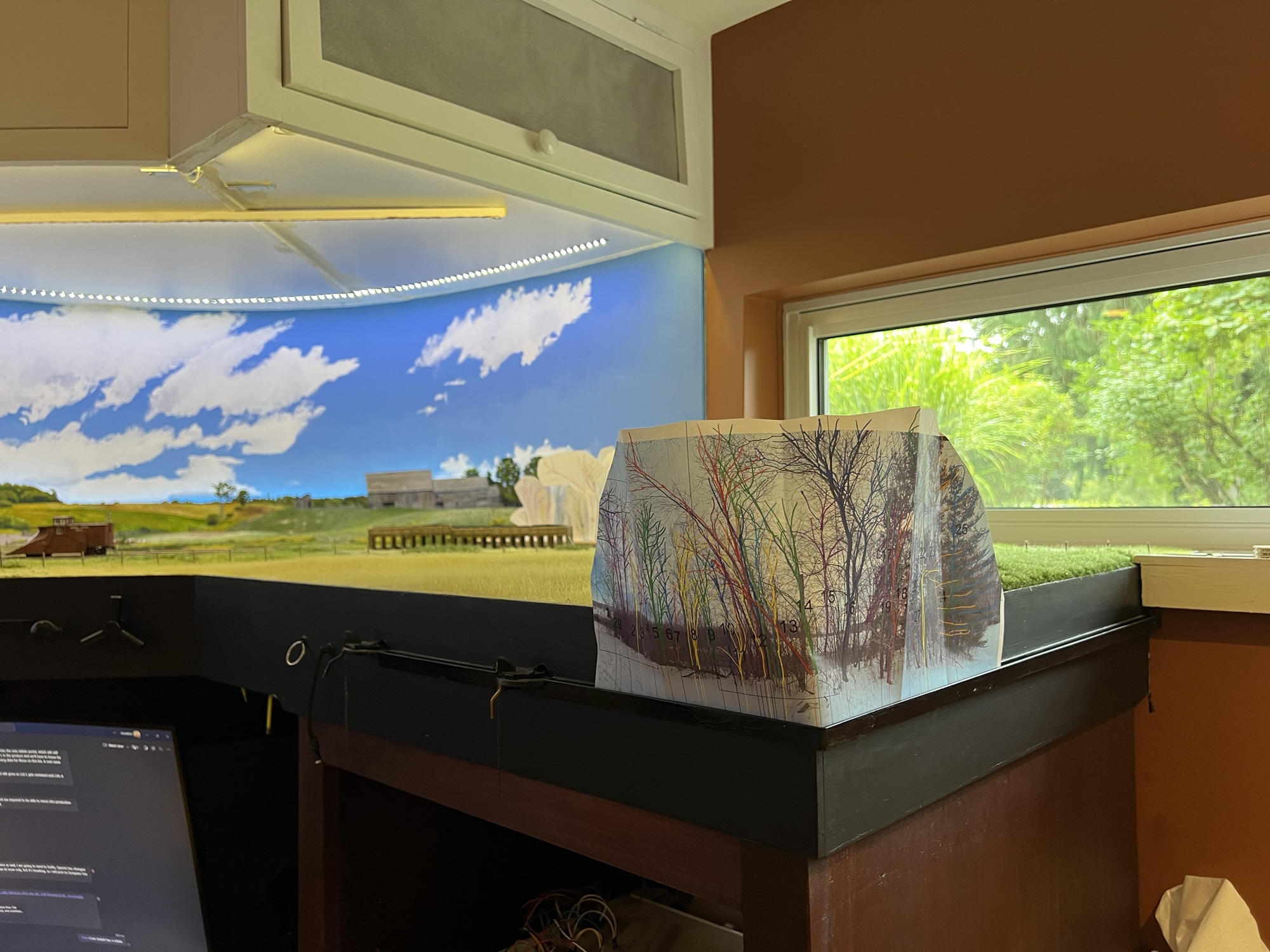


Does the window and it’s exterior background factor into the ‘picture’?
The reason I ask, I had a similar experience though my window was frosted. To get round the backlighting and distraction of the exterior I covered the window with card, and moved the layout a bit. With a Shelfie layout that’s relatively easy of course. I wonder if you temporarily blocked the window with card, whether sight lines and lighting might give you a different ‘answer’? I do like the look of the single specimen foreground and thicket at the rear.
I started answering, but it’s becoming a blog post!